
A Garden of Gratitude: Lewis River Rotary Club Garden Feeds Families in Need
Table of Contents
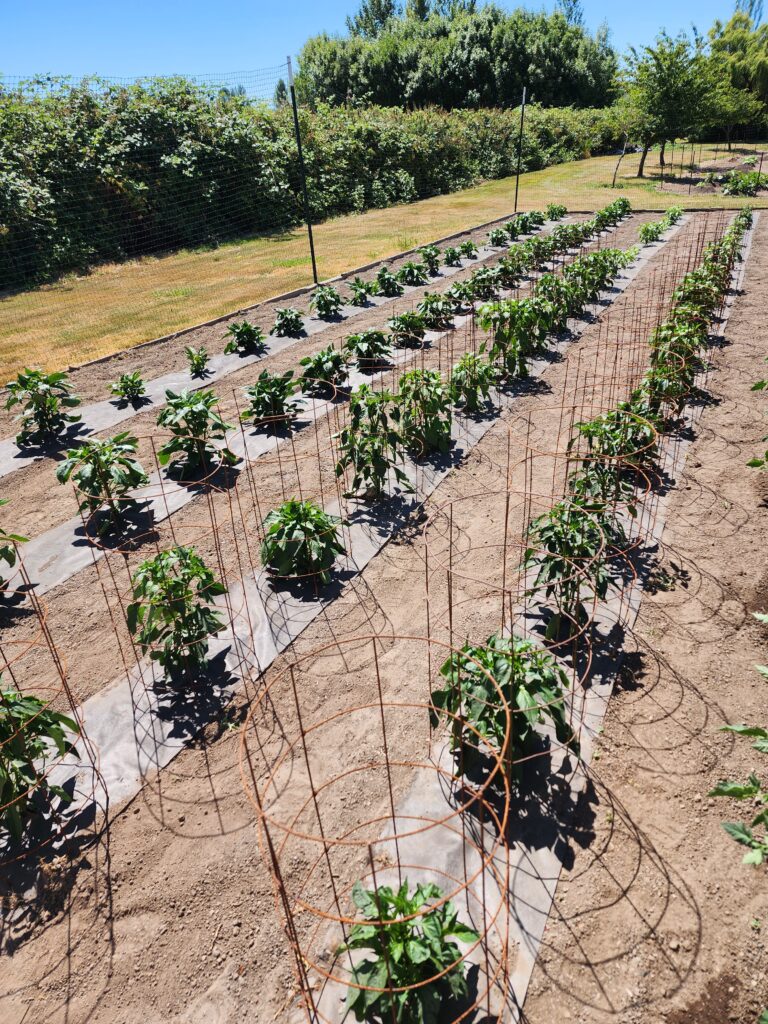
Battleground resident Terry Potter was retired, but seeing the empty space in his backyard left him feeling guilty. He had learned to tend a garden from his grandmother and wanted to pass those skills on to others who could benefit, knowing there are many families who struggle to put food on the table. After a call to the Clark County Food Bank and a connection with the Lewis River Rotary Club (LRRC), Potter’s backyard now feeds people in need, and at the same time is training a new generation of gardeners.
Growing Goodness – Lewis River Rotary Club Garden
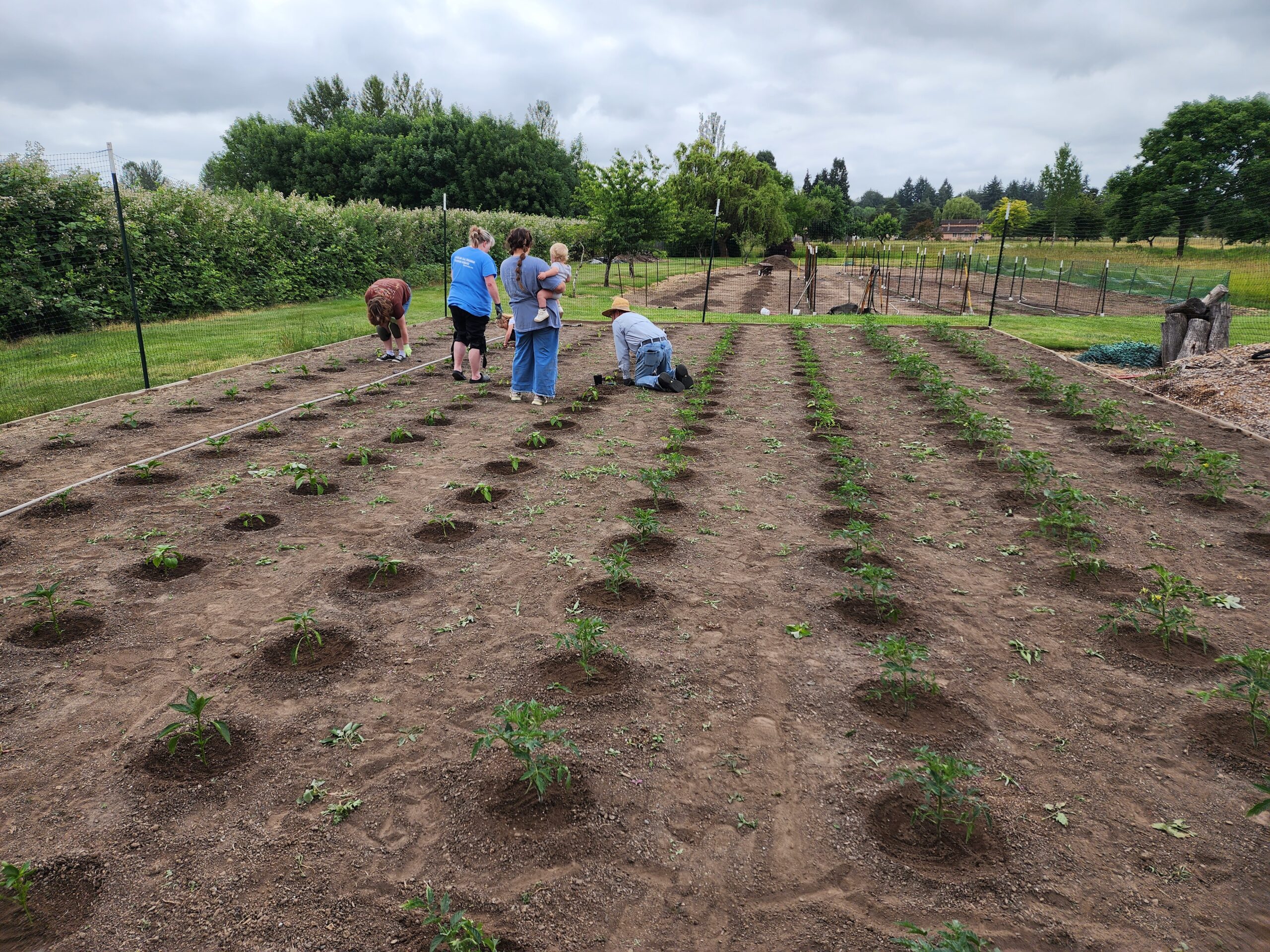
What has sustained this community project over the past five years goes beyond the support of the Rotary Club. Local youth groups from across Clark County come rain or shine, spring through fall, to plant, weed and work on the land. Neil Butler, who was president of LRRC at the time this garden project was beginning told me they have had 349 volunteers participate thus far.
Since the help wasn’t too hard to find, Potter was able to keep expanding his garden, and another Rotary Club member, Kathleen Fleming, added a garden to her property to increase production. Scout troops, youth groups from multiple denominations and high schoolers have all been volunteers, many coming back again and again, because even though the work can be hard, it’s actually fun.
Teaching is at the core of Potter’s motivation, saying, “I hate telling people what to do… but it seems to be mostly [the volunteers] have no problem being assigned a task.” Being with friends certainly helps, because what Potter has noticed in the kids who come to work is that “number one, they look relaxed, and number two, they are happy.” Bulter has noticed the same thing. He told me that at the end of the day when the bins are filled, he sees satisfaction and sense of pride in the youth, “even for the kids who had never touched a garden before.”
“I like the fact that they learn that hard work does have a benefit, and they learn where food comes from,” adds Potter, who grew up in the farmlands near Tillamook, Oregon. He says that growing up he had many responsibilities, but also a lot of freedom.
Another reason he started gardening again was to give his grandchildren a taste of that freedom. “I had a master plan in my mind to create a safe, park-like place for my grandchildren to roam and explore much as I had done in my youth. My four granddaughters are all adults now, but they have fond memories of visits where they got to help me in the garden and around the property, feed apples to the neighbors’ horses, learn to drive the lawn tractor and dig for buried treasure. This is what I offer to all children who visit now.”
“I was born to be a grandpa,” he says, so it’s not surprising how much he enjoys interacting with the young volunteers and helping them learn about the plants and how to use his tools.
Butler’s own daughter was only eight years old when she started helping at Potter’s property, and it wasn’t long before he had her driving the lawn tractor. As a parent, Butler appreciates the responsibility given to her.
“She understood that it was real work and that it mattered for it to be done well. At one point she told me, ‘I like it because people trust me to do important things, and I don’t want to mess it up’….that trust mattered more than anything,” he says. “That same growth happened with all my kids in different ways. The garden gave them more than a chance to help. It gave them confidence, responsibility and the understanding that their contributions truly mattered.”
Service Above Self – Lewis River Rotary Club Garden
One year, the USDA was facing significant funding cuts, reducing the amount of money available for local food banks. This reality made the garden project even more meaningful for the volunteers. “They saw each other in a new light, not as classmates or peers competing for attention, but as teammates working toward a shared goal,” explains Butler.
Both Butler and Potter shared how interesting it is to see the kids create a “rhythm” as they learn to do the work. Most start out a little unsure, but by the end they are anticipating what needs to be done next and helping each other along the way. Experience is not nearly as important as a willingness to work. This kind of teamwork is exactly why Butler joined the Rotary Club, so that his kids would, “understand that community does not just happen on its own.”
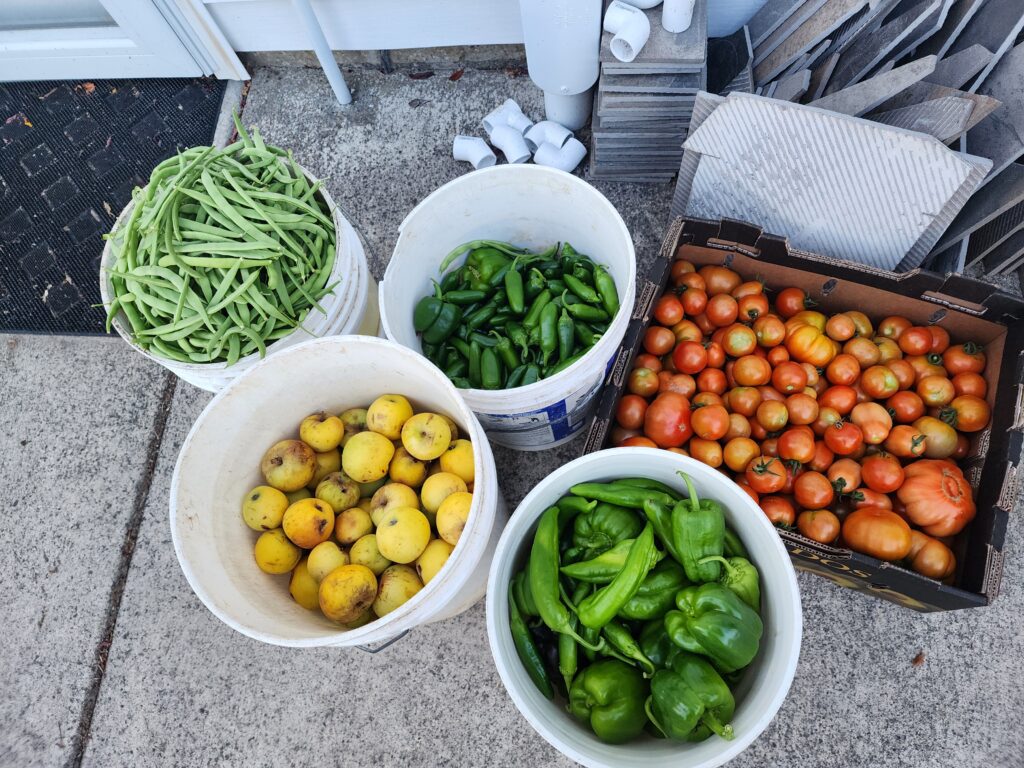
The harvest from both Potter and Fleming’s gardens is given to North County Community Food Bank. 22,000 pounds of fresh produce and $10,000 have been donated so far, but Potter says he’s “not keeping score; I just give as much as I can.”
Butler recalls explaining to a girl who was confused why they were picking so many beans that those very beans would be going directly to families who didn’t have the resources to buy enough food. “She went quiet for a moment and just looked at the plants in front of her. Then she said, ‘I didn’t know that really happened.’ A little later, she asked if she could come back again to help.” He went on to say when the youth understood that “the families receiving that food weren’t strangers. They were neighbors. They were kids they went to school with,” it stopped being about the work and became more personal.
In truth, any family could face an event that may send them seeking help at a food bank. In 2025, food pantries across the United States saw a large increase in demand. Potter understands from his own childhood experience that having the skills to grow your own food can lift some of the burden of food insecurity families may face. “I want to teach them to fish,” he says, but not only so they can help themselves, so that they can in turn share those skills with others who could benefit.
The Rotary Club’s motto “Service Above Self” is perfectly demonstrated in these gardens, from the seeds donated by a local business to the volunteers who aren’t afraid to get their hands dirty; these sacrifices become part of the gift and bounty of the garden, benefitting the giver as much as the receiver.
“There is a strong message right now about protecting time, saying ‘no’, and focusing on personal wellbeing,” says Butler. “Those things matter. But what I’ve seen is that focusing only on our own comfort doesn’t actually make life easier or lighter. Challenges don’t go away just because we step back. Being involved and serving others has a way of pulling us out of our own heads and helping us see beyond ourselves.”
Get Your Own Garden Going – Lewis River Rotary Club Garden
Having helped at Potter’s garden with my daughter last fall, I saw how many teens (to their own surprise) truly enjoyed the work of gardening. There is just something about a garden that instills a sense of gratitude and hope as you look forward to the delicious fresh fruit. Helping at a community garden, like these Rotary Club gardens, is one way to learn the basics, but it’s easy to get started with even just one plant in a pot.
Potter’s first question for a novice gardener is, “How big is your area?” and second, “Are you going to try and do it in the ground or a raised garden?” Once you can answer those questions, it will help you know how much to water. If you don’t have enough direct sunlight, Potter says you’ll have trouble growing some things, like tomatoes. “I can barely buy a store tomato. They might look like one and sometimes they smell like one, but they don’t feel like it and they don’t taste like it,” he laughs.
Next, Potter says to make a plan, but don’t expect things to go according to that plan. Like every other gardener he says, “I’ve made all the mistakes, but that’s just how you learn.” Another important thing to remember is drainage. “If you water enough, your plants will keep producing,” he explains, but if you are in a clay heavy spot, root rot is something to watch out for. “The sooner you can get things in the ground, the better,” he says, referring to the spring planting window. In Clark County, we are safely past the point of frost by Mother’s Day.
After a few years of learning what works and what doesn’t, you’ll probably find that in some ways, a garden takes care of itself. Plants you didn’t mean to grow suddenly appear out of a compost pile and a bumper crop has you wondering how many ways you can use zucchini without your kids noticing. When this happens, just know that the Clark County Food Banks are happy to get your excess to someone who would truly appreciate it.
Read the April 2026 Issue