

Making Waves: A Guide to Southwest Washington Swim Schools
Table of Contents
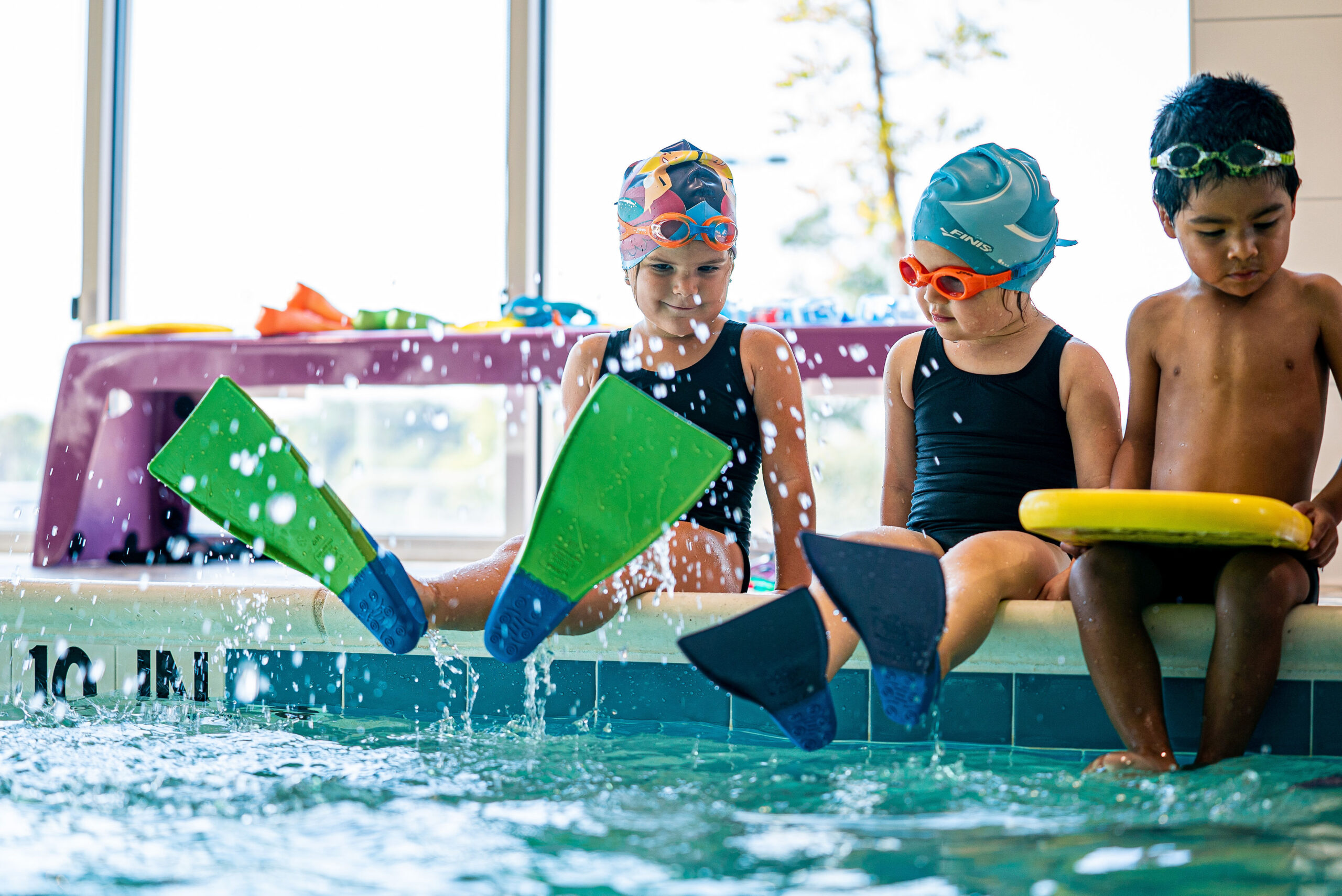
A shriek as toes hit the water for the first time, the tap of bare feet on concrete and the excited giggles that ring out from the lake’s edge. Water is stitched into the fabric of childhood. Memories are made in backyard pools, cannonballs and long summer afternoons that seem to go on forever.
Why Water Safety Starts Early
However, beneath the chuckling and splashing, something more hushed and far more powerful exists. Water is unpredictable and dangerous. Water safety isn’t instinctual to children, and it’s not something they “pick up” on their own.
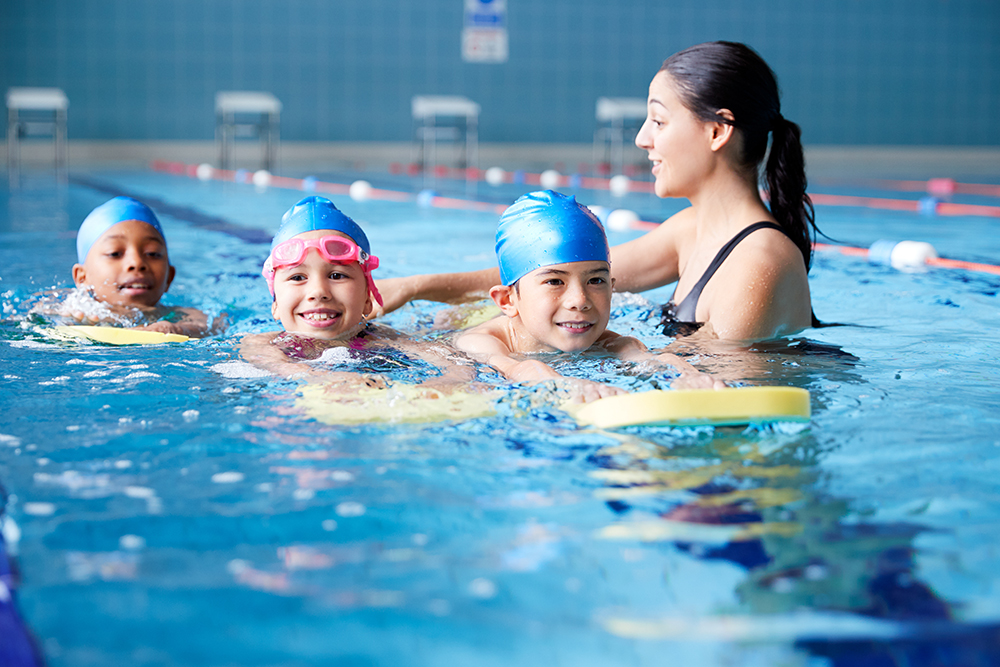
That’s when parents turn to swim schools, and for many local swim instructors, that’s where the real work begins.
“One of the most prevalent misconceptions parents have about water safety is the belief that simply educating children about water safety is enough,” says Rachel Brooks, aquatics coordinator for Gold’s Aquatics at Gold’s Gym. “In reality, it’s crucial for children to discuss and practice water safety skills repeatedly.”
Brooks remembers working with a group of 9- to 11-year-olds, many of whom already knew how to swim. She asked if they should jump in the water to save a friend who was struggling and was surprised when they all shouted “yes!”
“That response highlighted a critical misunderstanding,” she said.
The safer approach, she explained to the group, is to reach for the person, throw them something that floats, or call for help. It’s a lesson that may seem simple, but without consistent reinforcement, even older children can default to dangerous instincts.
Learning the mechanics of swimming is the start, but true water safety goes deeper than learning to paddle. It’s about repetition, practice and staying steady under pressure.
Those lessons are best learned earlier instead of later.
Building Confidence From Infancy
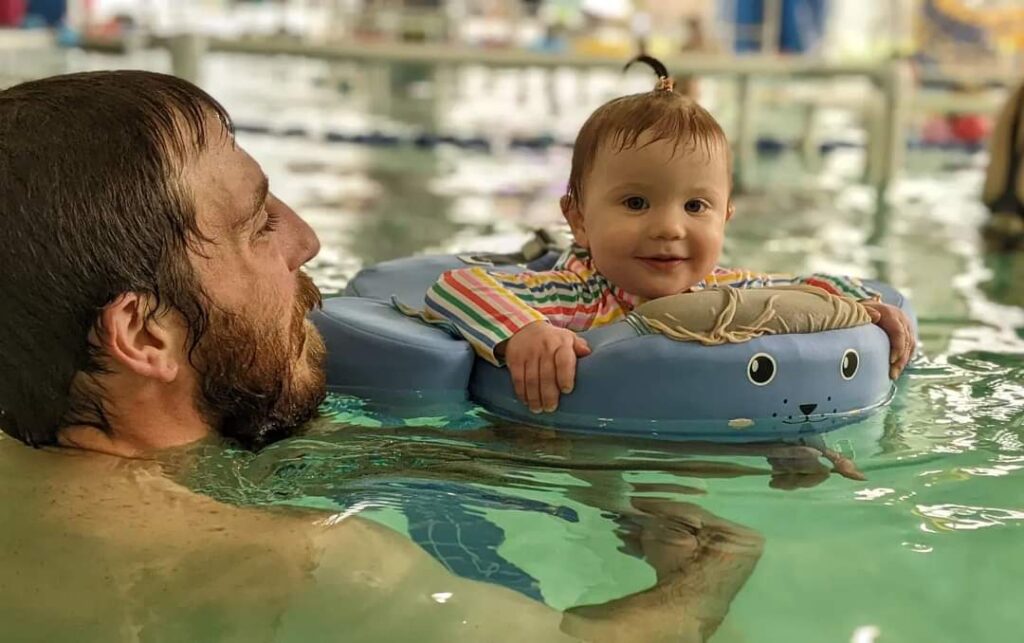
At Kids Club Fun and Fitness, children can begin their swim journeys as infants. Aquatics Director Brooke Daggett says these early introductions to water play a key role in building confidence and trust around water.
“We recommend starting swim lessons as early as infancy through our water babies program (ages 0 to 2),” Daggett explains. “The earlier a child is introduced, the more natural water movement and confidence become, which is critical for drowning prevention.”
At Emler Swim School, lessons can begin as young as two months old, with each child encouraged to learn and progress at their own pace. The focus in these early stages is on building a strong foundation that supports both safety and long-term confidence in the water.
In these classes, babies and toddlers become comfortable in the water while learning important early skills. They begin to respond to water on their face, move their bodies with purpose and develop foundational safety techniques like rolling over, jumping to a back float and eventually progressing to Jump-Turn-Swim. While it may not look like traditional stroke work, these are the building blocks of real water safety.
“What we see every day at Emler is that kids who start early are not only safer, they’re more confident learners overall,” says Morgan Madrid, the general manager of the Hazel Dell location. “They’re comfortable trying new things, following instructions and progressing through clear milestones.”
Harmony Choquette, the swimming program director, instructor and coach at Harmony Swim School, opened her school in 2014 and made specialized programs with small classes a priority.
Choquette realized that when given a good experience, the family tends to stay with a talented instructor. “It has been so rewarding to be able to teach a whole family, from the parents down to each sibling, as that family grows,” she says. “It has also been surprising that, because I have been teaching lessons since 2000, some of my best instructors were former students. I love that my children also want to get involved when they reach age readiness.”
Finding the Right Fit for Every Child
As children grow, so do their needs in the water. That’s why many swim schools structure their programs around both age and developmental readiness.
At Kids Club Fun and Fitness, lessons are designed to meet children where they are. That includes parent-and-child classes for infants that focus on water exploration and bonding, while group lessons for ages 3 and older introduce more structured skill-building, including breath control, floating and coordinated movement. As swimmers advance, they can move into stroke development or pre-team programs that focus on endurance and technique.
No matter a child’s level, it’s important for parents to always assess readiness. Daggett says that a ready-to-swim child can participate in a structured environment, follow simple directions and separate comfortably from a parent.
A child may not be prepared when they experience extreme fear, difficulty participating in a group setting or have challenges following basic instructions. In those cases, private lessons or a more gradual introduction to water can help build comfort and trust.
What Parents Should Look For in Southwest Washington Swim Schools
This flexibility helps families find an entry point that feels right for their child, without pressure. With so many options available, choosing the right swim program can feel overwhelming. A handful of key factors can help guide parents in making the decision, and it frequently involves doing research.
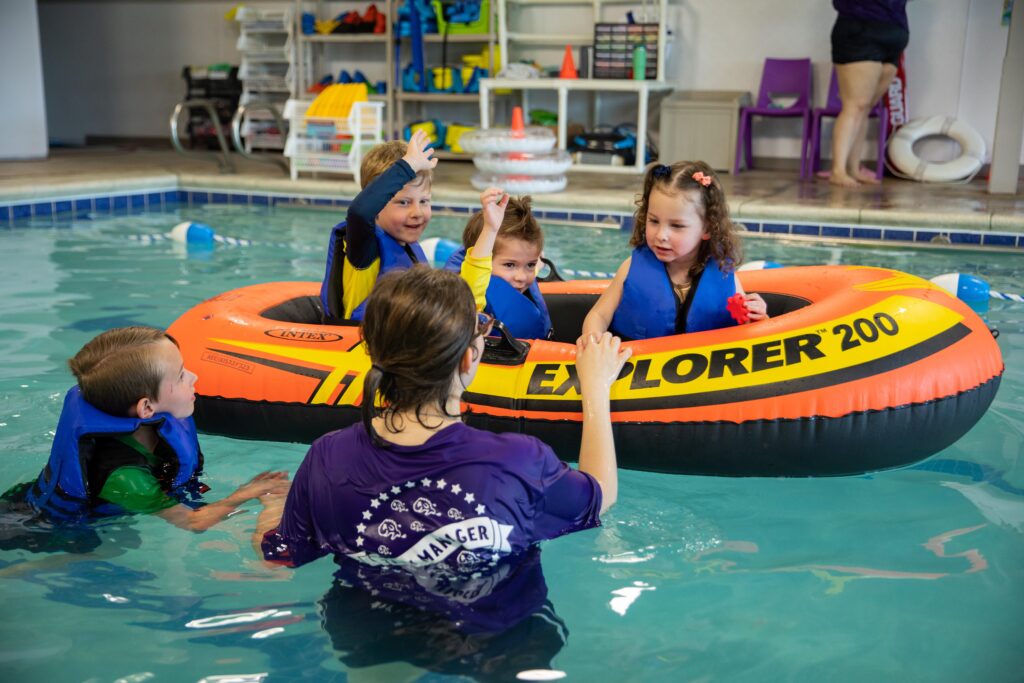
Local swim instructors encourage parents to talk about water safety often with their swim schools. At Emler Swim School, safety is built into every layer of the program. Classes are intentionally kept small to allow for individualized attention, and instructors are trained not just to teach swim skills, but to actively guide and reinforce safe behaviors in the water.
The curriculum is designed around real-life situations, so children aren’t just learning how to swim — they’re learning what to do if they unexpectedly end up in the water. By consistently reinforcing skills like Jump-Turn-Swim and jump to back float, Emler helps children build habits that can make a real difference when it matters most.
Brooks at Gold’s Gym says parents should look for schools with proven track records. She encourages parents to get testimonials from current or former students.
“The right swim school will balance skill development with enjoyment, ensuring that children look forward to their lessons,” she says.
It’s also important to choose a yearly program rather than just a block of classes. The regular exposure that a weekly class provides will help children retain skills and build confidence over time, rather than starting from scratch each summer.
The Benefits Beyond Water Safety
While water safety is often the primary reason parents enroll their children in swim lessons, there are many benefits to being in the water.
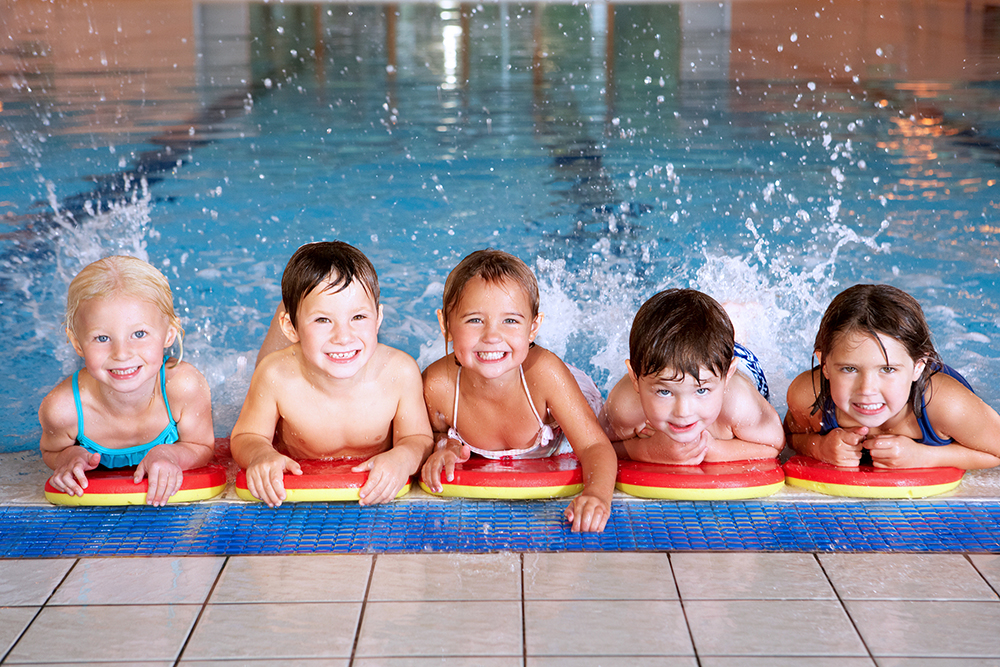
“I’ve talked with many parents who can attest to the positive impact swimming has had on their children,” Brooks says. “Some kids may not have much interest in land sports, but they often find a home in the water.”
In that environment, children build confidence, form friendships and develop a feeling of achievement that carries into other areas of their lives.
For children who may not gravitate toward traditional team sports, swimming can offer a different kind of space to burn energy and build strength, in a way that seems less structured, freer and often more accessible.
There are emotional benefits, too. The rhythmic nature of swimming and the calming properties of water can help reduce stress and anxiety, offering children a way to regulate their emotions while staying active.
For Brooks, those benefits have lasted a lifetime.
“Swimming set a strong foundation in my life for health, friendships, discipline and determination,” she says. “It’s a skill I will forever be thankful to my parents for providing.”
A Lifelong Skill
In Southwest Washington, water is never far away, and swimming is more than simply an extracurricular activity; it’s an essential life skill.
Whether a child starts at two months or seven years old, the goal stays the same: to build confidence, competence and respect for the water. These are not skills that develop overnight. It takes time, repetition and the right environment to truly take hold.
And for many families, that journey becomes more than safety.
It becomes about watching a child move from hesitation to confidence, from fear to freedom, one small step, one splash, at a time.
If you are interested in learning more or enrolling your student, check out these local swim schools.
Local Swim Schools to Explore
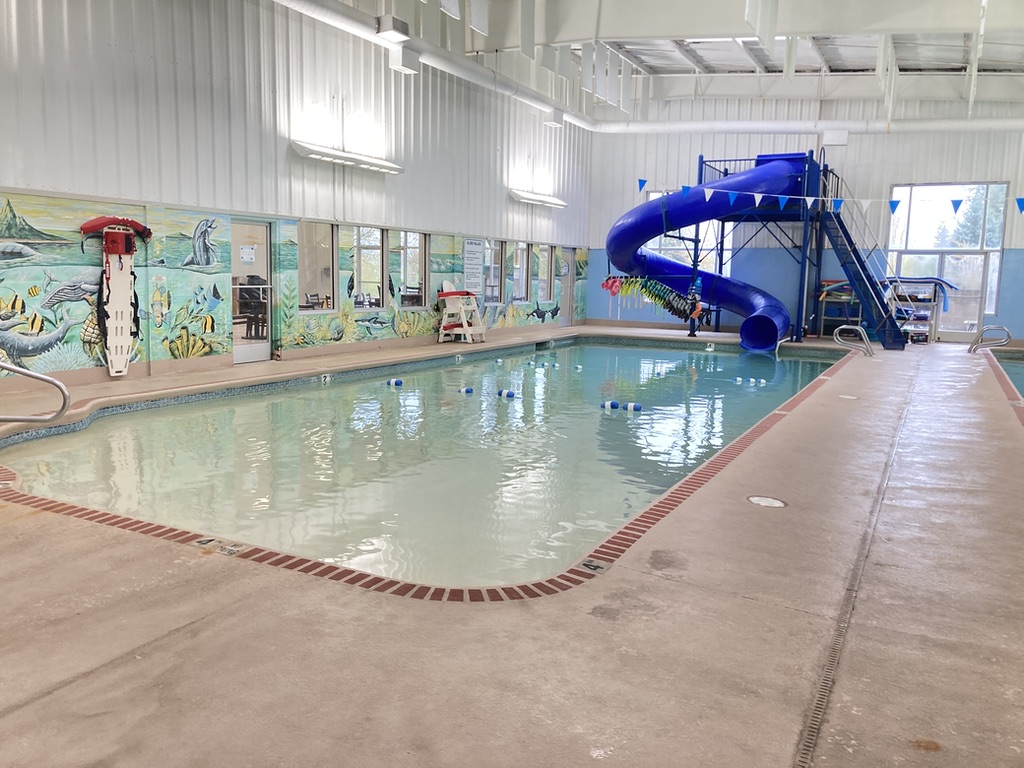
Sessions: Swim lessons are offered year-round, with new sessions starting every two weeks for the summer.
Ages: Parent/Child classes for swimmers younger than 3. Group lessons are for swimmers 3 and older. Private lessons are available.
Classes are scheduled on Mondays and Wednesdays, Tuesdays and Thursdays, and Saturdays. Each session runs for four weeks, and registration typically opens about a month before the start date.
Cost: Group lesson sessions are $170 per level (1-5) for a four-week session. They also offer a 30-minute Level 1 Saturday class for beginners at $102 per session. Private lessons are $65 per 30-minute lesson, and semi-private lessons are $110 per session (for two swimmers). A $30 annual registration fee also applies.
Sessions: Swim lessons are offered year-round
Ages: Children can start as young as 2 months old and progress to advanced swimmers.
Schedule: Classes are available throughout the week to accommodate busy family schedules.
Cost: Group, private and semi-private lessons are available at weekday discounted pricing, starting at $35/class at the Hazel Dell location; pricing varies by location. A free trial lesson is available for new families.
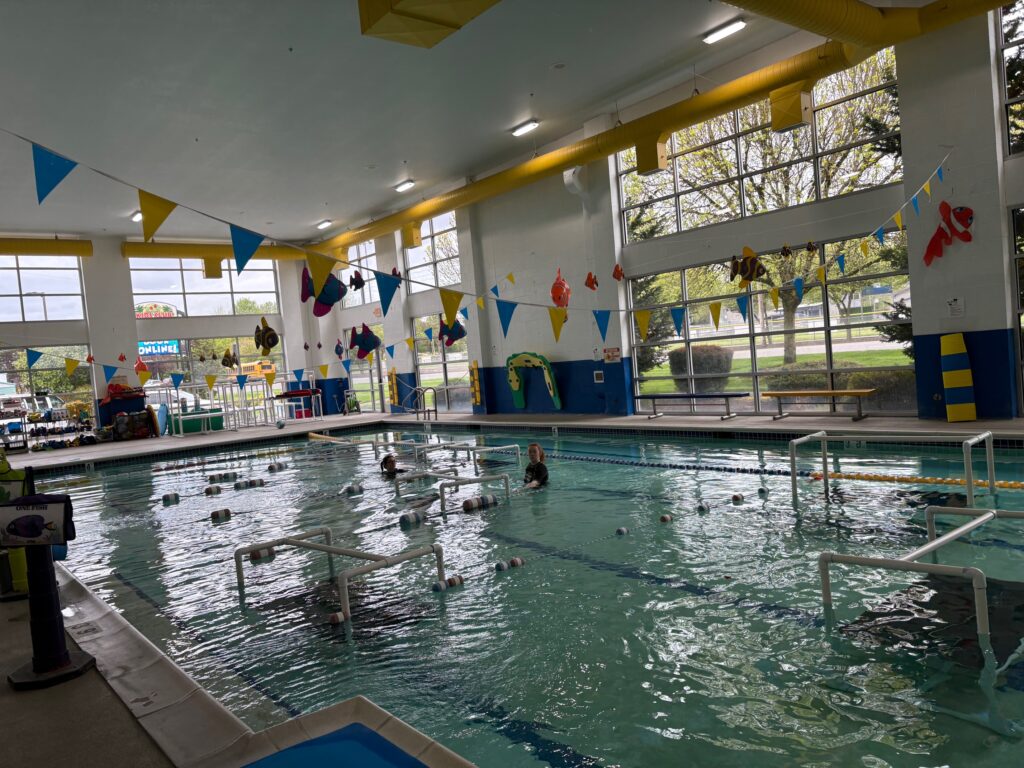
Sessions: Swim lessons are offered year-round
Age Range: Starting at 2 months through advanced swimmers
Schedule: Once-a-week classes (30 minutes), with additional Swim Series (Monday–Friday intensives) offered during spring break and summer
Cost: Group Lessons: $93/month, Semi-Private Lessons: $135/month per child, Private Lessons: $265/month, Annual Registration Fee: $25 per child
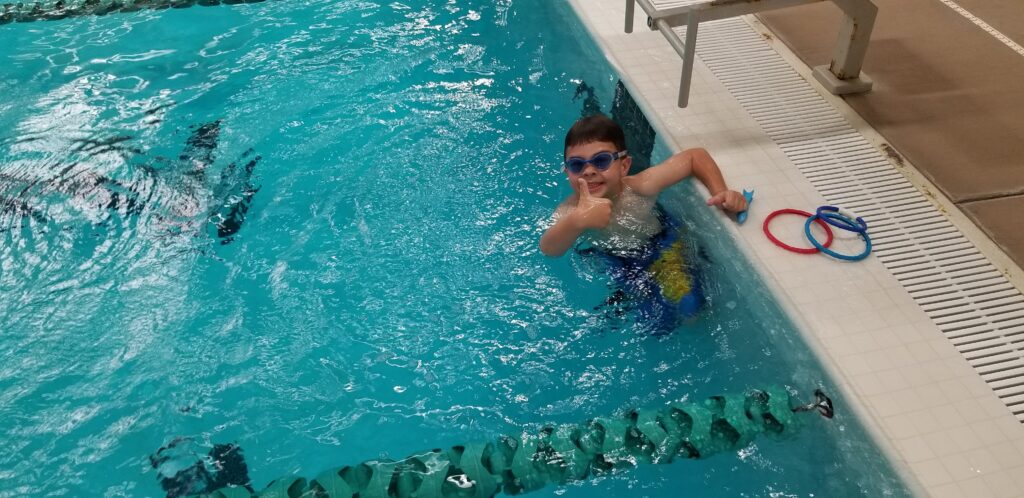
Sessions: Swim lessons are offered year-round
Age Range: Starting at 6 months through advanced swimmers
Cost: Sessions start at $27 for parent/infant or toddler lessons, $35 per student for semi-private lessons, group and non-competition swim team lessons, $62 for private and $67 for family private lessons.
Sessions: Swim lessons are offered year-round
Age Range: Starting at 4 months through advanced swimmers
Schedule: Consecutive weekly group lessons that focus on essential water safety skills, for beginners all the way to advanced swimmers.
Cost: $40/Group lessons, $53/Independent Baby, $35/membership. Discounts available for siblings and multiple scheduled weekly lessons.
Sessions: Once registered, the swimmer will adhere to the class schedule for the block of classes. Registration will be required for each set of classes.
Age Range: Starting at 6 months through advanced swimmers
Schedule: Class blocks can be found on the website
Cost: 6 lessons $79 resident /$103 nonresident | Private $279 resident/$376 nonresident
Sessions: Swim lessons are offered year-round
Age Range: Starting at 3 months through adults and advanced swimmers
Cost: $165 per month plus tax for one lesson per week (per swimmer). $297 per month plus tax for two lessons per week or two swimmers enrolled once per week (minimum two enrollments). Annual membership fee of $35 per household applies.
Read the June 2026 Issue