


Worth the Wait: Vancouver Couple Welcomes Record-Breaking Twins through Embryo Donation
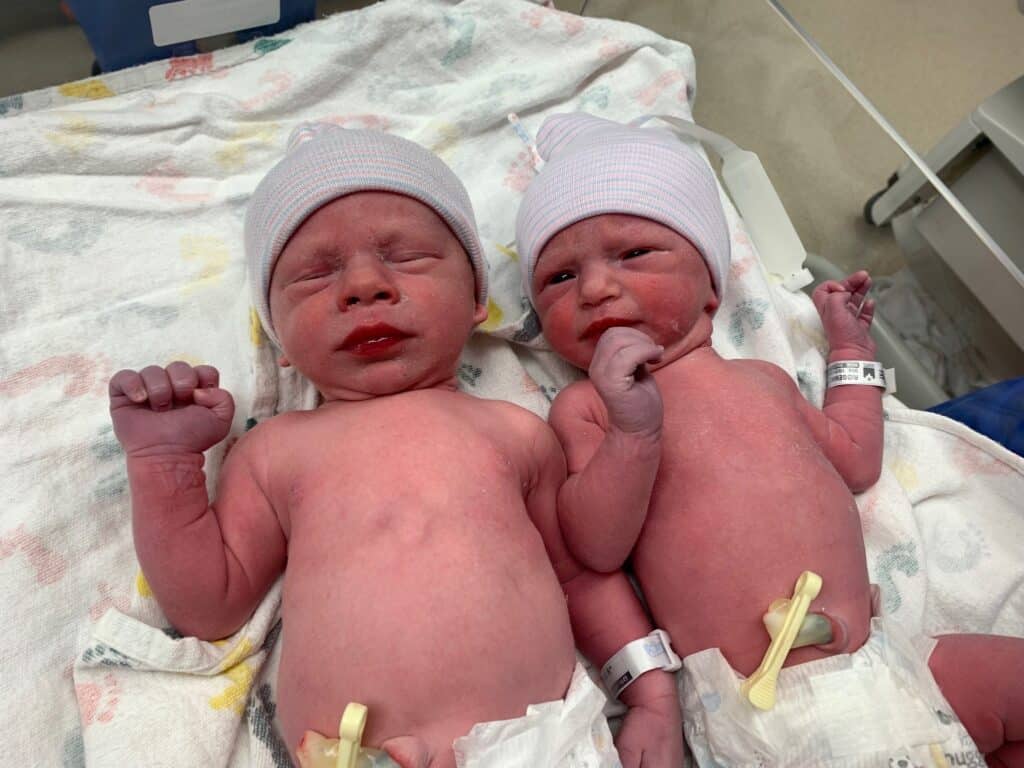
Our very own Vancouver is now home to two Guinness World Record holders, and they just so happen to still be in diapers. Toddler twins, Lydia and Timothy Ridgeway, may have celebrated their first birthdays just last year, but they were born from the world’s oldest known embryos resulting in a live birth.
In 1992 an anonymous couple donated embryos leftover from in vitro fertilization (IVF) treatments. If couples end up with excess embryos, or fertilized eggs in the very beginning stages of development, they can be frozen and stored for other families to adopt in the future. In the case of Lydia and Timothy, the embryos had been frozen in liquid nitrogen for 30 years until Rachel and Philip Ridgeway of Vancouver selected them from the Embryo Donation Center, which resulted in the birth of the twins.
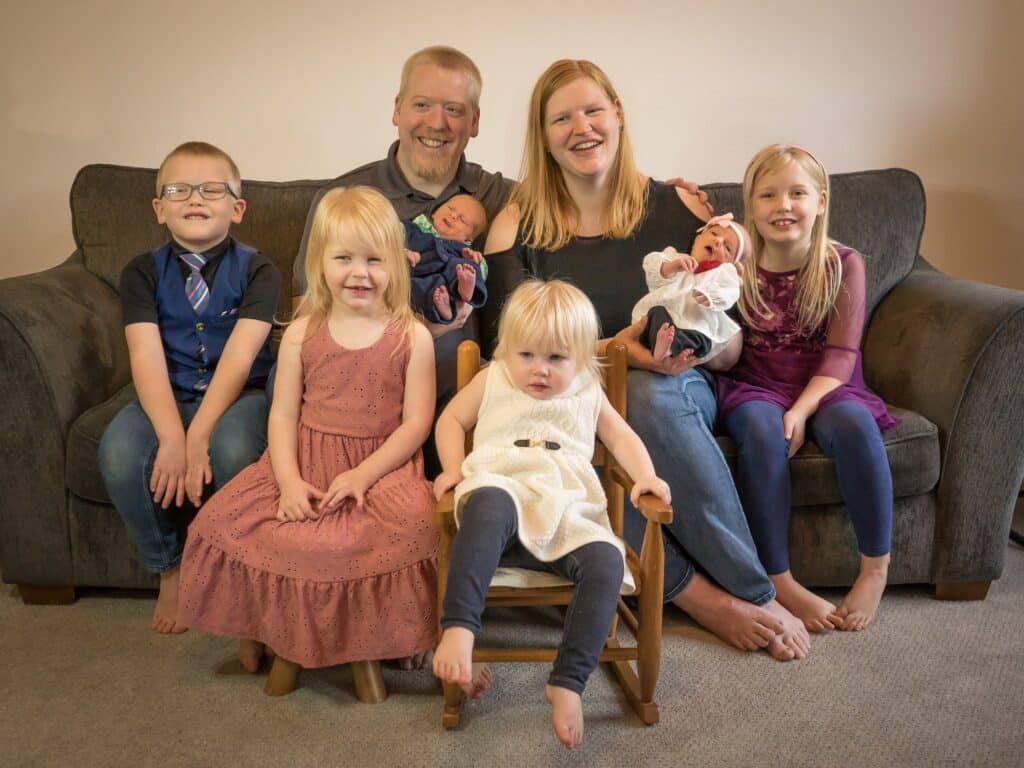
Rachel and Philip were only 3 and 5 years old respectively in 1992 when the embryos that would later become their children were first conceived. In 1992, Bill Clinton was elected president, “Sister Act” was one of the most popular movies and the average price of a CD was $11.98. And while Timothy and Lydia wouldn’t grow up in the 90s and get to sport bike shorts with neon windbreakers, they would eventually be born decades later to make history. “Life without Lydia and Timothy doesn’t seem imaginable now,” says Rachel Ridgeway. The Ridgeways were the proud parents of four children before utilizing this unique method to expand their family.
“We’ve always been interested in adoption,” says Rachel, adding that the couple initially faced challenges conceiving their older children, though the complications turned out to be easily treatable with medication. “After the birth of our third child, we were thinking about how we could help others,” she says. While the concept of adopting donated embryos was new to her, Ridgeway says the method piqued her interest immediately. Rooted deeply in their Christian faith, the Ridgeways wanted to find a way to help other children in need. She says that because of their belief that life begins at conception, “We wanted to give these children a chance at life.”
After hearing about the National Embryo Donation Center (NEDC), located in Knoxville Tennessee, the Ridgeways were just beginning the process of embryo adoption when they were beautifully surprised with their fourth pregnancy, which of course put the process on hold. After the birth of their daughter, Miriam, they traveled to Tennessee to meet the staff, pass the medical clearance, and finally, begin looking at donor profiles.
“It was absolutely insane to be looking at this massive database and thousands of profiles and wondering, how do we pick?” Rachel credits her husband with the idea to look for the donor profiles who had been waiting the longest, which was a set of five embryos that were donated in 1992. Because the biological donor father also had Lou Gehrig’s disease, or amyotrophic lateral sclerosis (ALS), the embryos were considered even more vulnerable.
Mark Mellinger, marketing and development director for the NEDC, explains that virtually all the embryos donated to the center come from families who have successfully completed their families through IVF and fertility treatments. Mellinger explains that most families that make donations no longer have a need for the extra embryos but want them to have a chance at life with another family.
When asked about potential risks for using embryos that had been frozen for so long, he explains that the only challenge is how much the freezing technology has advanced in the past three decades. The freezing process used now is called vitrification and is a rapid freezing process as opposed to older, slower methods which create more risk during the thawing process. “Embryos are more likely to survive the thaw and implementation with this new technology,” explains Mellinger.
The Ridgeways, understanding that their embryos were frozen using older technology, knew that if their embryos could survive the thaw, the length of time they’d spent on ice would make no difference. The challenge would be the uncertainty that lay ahead.
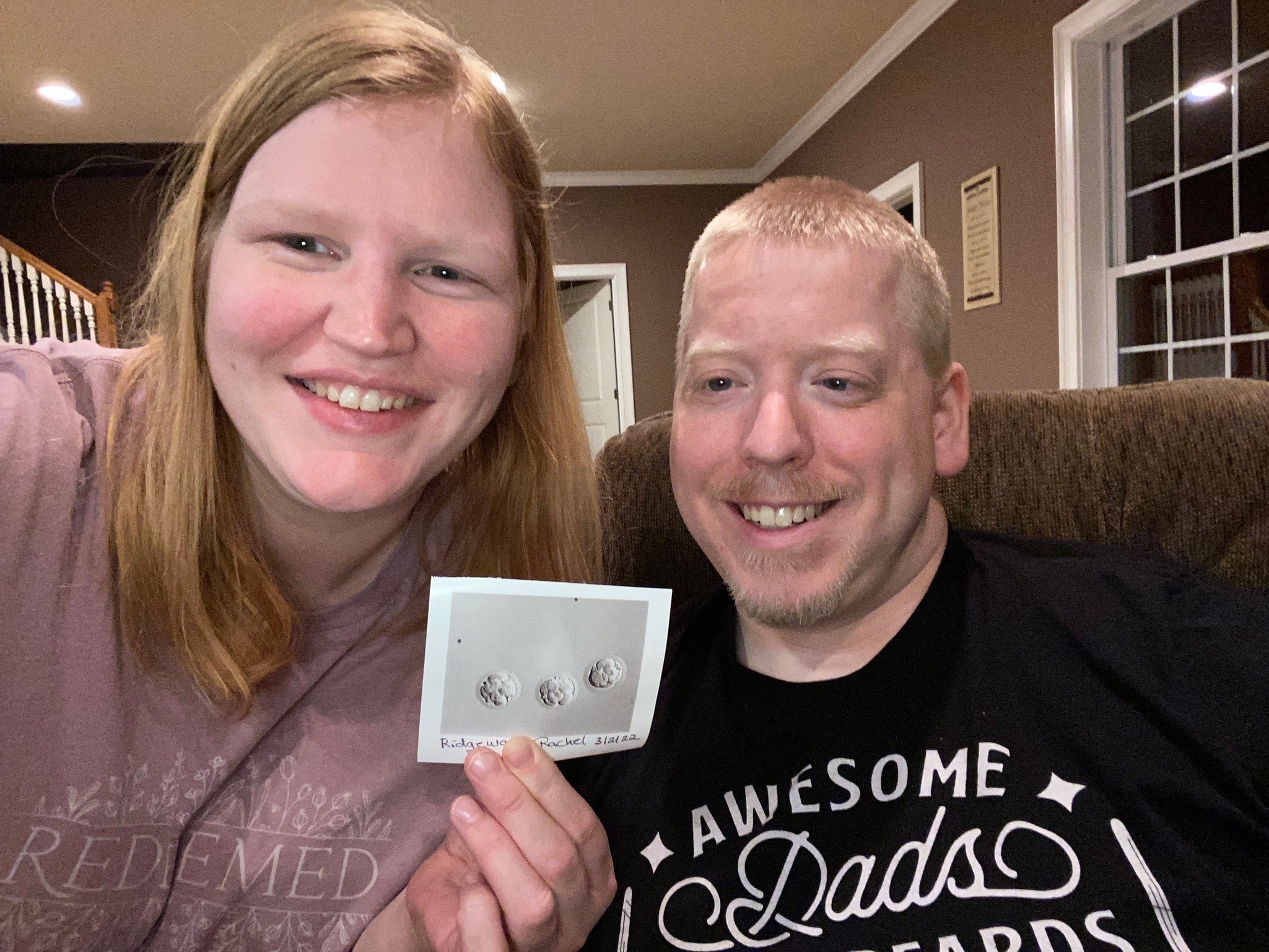
“We’re on a plane to Tennessee while the dethawing process is happening, so there’s no way for them to let us know exactly what’s going on,” says Rachel. After arriving in Tennessee, the embryologist told them that three of the five embryos had thawed successfully and looked ready for transferring. The embryologist showed the couple a picture of the three embryos and suggested transferring two of the three. “I asked what would happen to the third, and they said it would be refrozen and we could come back for him or her if we wanted,” says Ridgeway.
After examining the picture and looking at her husband, Rachel responded, “You’ve just shown me a picture of my three children; I can’t put one back. I have to have them all today.” She adds that she looked at her husband, who was also tearing up, and knew they were on the same page. All three embryos were transferred into Rachel in March of 2022. Four weeks later, the Ridgeways learned that two of the embryos had successfully implanted in the uterus. Twins Lydia and Timothy were later born at 37 weeks gestation on October 31 of the same year.
Rachel describes the process as an intense emotional roller coaster: “You’re just waiting—waiting for the transfer, waiting for the blood draws, waiting to see if your numbers go up, and waiting for that first ultrasound.” Rachel credits her faith for her ability to trust that things would work out exactly as they were supposed to. “We went in knowing we weren’t guaranteed anything,” she says. “There’s definitely the waiting and wanting these children to live and to be able to raise them and see them and not knowing if that’s going to happen or not,” she adds. Thankfully, the roller coaster resulted in a happy ending for all involved.
Mellinger says that the staff at the NEDC were ecstatic and celebratory about the Ridgeways’ successful experience. “It’s almost like science fiction come to life, but it’s not fiction,” he says.
While not as widely known as adoption and IVF fertility treatments, embryo donation is becoming increasingly popular. The current success rate for the NEDC is 54%–meaning 54% of embryo transfers result in a viable pregnancy, while 45% of those pregnancies result in birth. “Parents who come back for multiple attempts have an 85% success rate,” says Mellinger. “We want people to know that we’re here and there’s a need,” he adds. He explains that while the cost of the procedure from beginning to end can range from $10,500 to $12,000, this tends to be more affordable than traditional adoption or fertility treatments. “The Ridgeways are living proof that you can be part of something special,” he says.
The Ridgeways have glowing things to say about the NEDC as well. “Things can get really complicated doing them from a distance,” says Rachel. “But the NEDC works really hard to work with you and walk you through the process.” She adds that, “They really have a love and a heart for people and a desire to get these [embryos] new homes.”
Rachel says transparency was extremely important to her when discussing the expansion of their family with her other children. “I’m an RN, so my children probably know more medical terminology than most average children, but it was very important to us that they were included in every step of the process.”
When she and her husband landed in Knoxville and were about to begin the transferring process she says, “We called [the kids] right away to let them know about how many babies they had transferred, and as soon as my numbers were up, we let them know right away as well.” She tells me that the kids could not be more excited for their growing family, particularly her son who was ecstatic to have his first brother. “They just love having Timothy and Lydia as their siblings, and now that they’re older, they’re really involved and are forming those sibling bonds,” she says. “It’s an amazing blessing for us.”
Having worked for years as a registered nurse, Rachel now stays home with the six children and oversees home schooling. Chatting with Rachel over Zoom, her presence is remarkably calm and grounded. “I’ve been told I’m a pretty chill mom,” she laughs. “Things happen. Spills happen. Mistakes happen.” She goes on to say, “The Lord’s really helped me recognize that kids are kids, and there’s a lot of peace and trust that comes with having strong faith.” The couple also consider themselves lucky that Philip can work from home which makes a big difference. “He definitely changes his fair share of diapers,” says Rachel.
A typical day for the Ridgeway family starts with family breakfast and then chores and home-schooling, which changes every day. “It seems like there are times where we can get a lot done in the morning, and there’s times when we don’t get as much done, and that’s OK. That’s the beauty of being a home-school parent and home-school family,” she says.
Noting that people are always in awe of the idea of parenting six children, she adds that it wasn’t six all at once, so they have been able to ease into the process. “I have to say though, two at one time has definitely thrown us for new adventures. After you have four kids, you think, ‘This? We’ve done this before,’ just to be thrown a big loop,” she says.
As for what the future holds, the Ridgeways are open to whatever may come their way and wherever their faith leads them. “The size of our family has never been something that we’ve really discussed in regard to how many,” says Rachel. “There’s no magic number for us.” The kids are already asking when the next one is coming, she says, but she doesn’t know for sure. “It’s been a huge blessing, and I would definitely be open to returning to the NEDC again,” says Rachel. As for now, they are happy and adjusting to being a family of eight, and only time will tell what’s in store for this beautiful family.
To learn more about the Embryo Donation Center or the process of embryo donation, visit their website at embryodonation.org.
Read the full March 2024 issue here:
Go here to read more pregnancy-related content.




Claire
Meanwhile, born babies/children wait to be adopted… I can understand this concept for couples who can’t conceive.