
Helping Hands: Farm to Table Food from Clark County Food Bank
The history of the 78th Street Heritage Farm is a story of community. In 1871, Clark County obtained the property from a local family and used it as a farm to feed those in need. Today, it is home to many gardens; some belong to families and individuals who rent garden space while other plots are used by the Clark County Master Gardeners for demonstrations and testing. And ten acres are farmed by Clark County Food Bank (CCFB) volunteers.
Community gardens like this have proven to be a vital resource to combat hunger locally. Not only does the farm provide fresh food for families in need, it also brings community members together to work toward a common goal. June through October, farm work parties are held where anyone, including kids, can show up to help harvest the 70,000 pounds of carrots, corn, cucumber, squash and tomatoes grown each year. All of the farm-grown food is kept fresh, not frozen, and distributed through CCFB’s partner agencies.
Picking and processing the produce takes plenty of helping hands. Abbey Price, an AmeriCorps member who serves in the farming and gleaning associate role, learned about the opportunity shortly after moving to Vancouver just over a year ago. “I heard that the food bank was looking to hire a new AmeriCorps at the farm and I was immediately intrigued. I loved that the job would entail spending time outside around food, all while continuing to support people in need of access to crucial resources for a healthy, joyful life.” Her primary role is to help to seed and maintain the farm, but during the off season she’ll help with distributing, stocking, greeting clients and at special events.
Though she wears many hats, her favorite hat is at the farm. “The look on a kid’s face when they take a bite of fresh corn or pull a carrot out of the ground is absolutely priceless and so lifegiving to me!” she says.
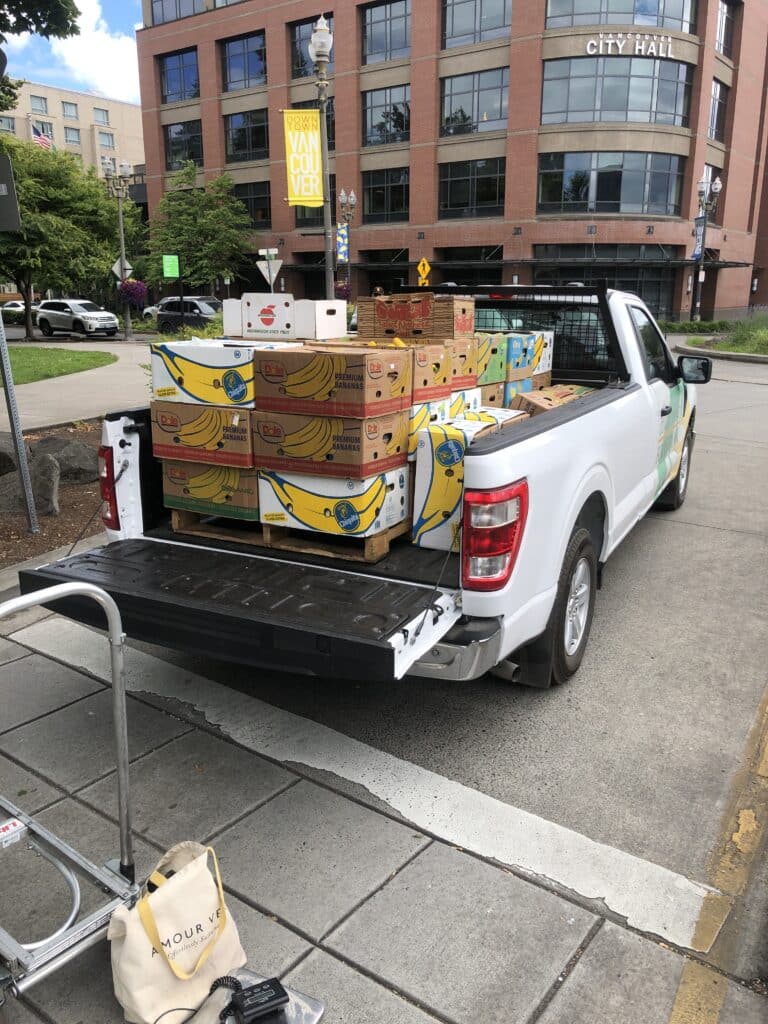
Alison Lauderdale, director of community programs at CCFB, explained to me how the food bank collects as much food from as many sources as possible to fill their emergency food supply. While most people are aware the food bank takes donations from food drives and recovers food from grocery stores, they may not know that some food is purchased from small local farms to help support the local food economy. Excess produce at risk of being wasted is also gleaned from Vancouver Farmer’s Market.
In fact, backyard gardeners are encouraged to bring their bumper crops to the food bank, or plant an extra row! “We love that by farming and gleaning, our neighbors facing food insecurity still have access to fresh, locally grown produce—that they are getting some of the best produce, and not just what is on its last leg. We also love that our farming and gleaning efforts involve a lot of people in the community, through volunteering and donating extra produce,” shares Lauderdale.
Clark County Food Bank exists to “alleviate hunger and its root causes,” therefore education plays an important part in CCFB programs. Part of Price’s role includes helping to coordinate volunteers at the farm work parties, “to [teach] about the land, growing food, and helping them to understand the reason it’s so important to get fresh produce to our community,” she says.
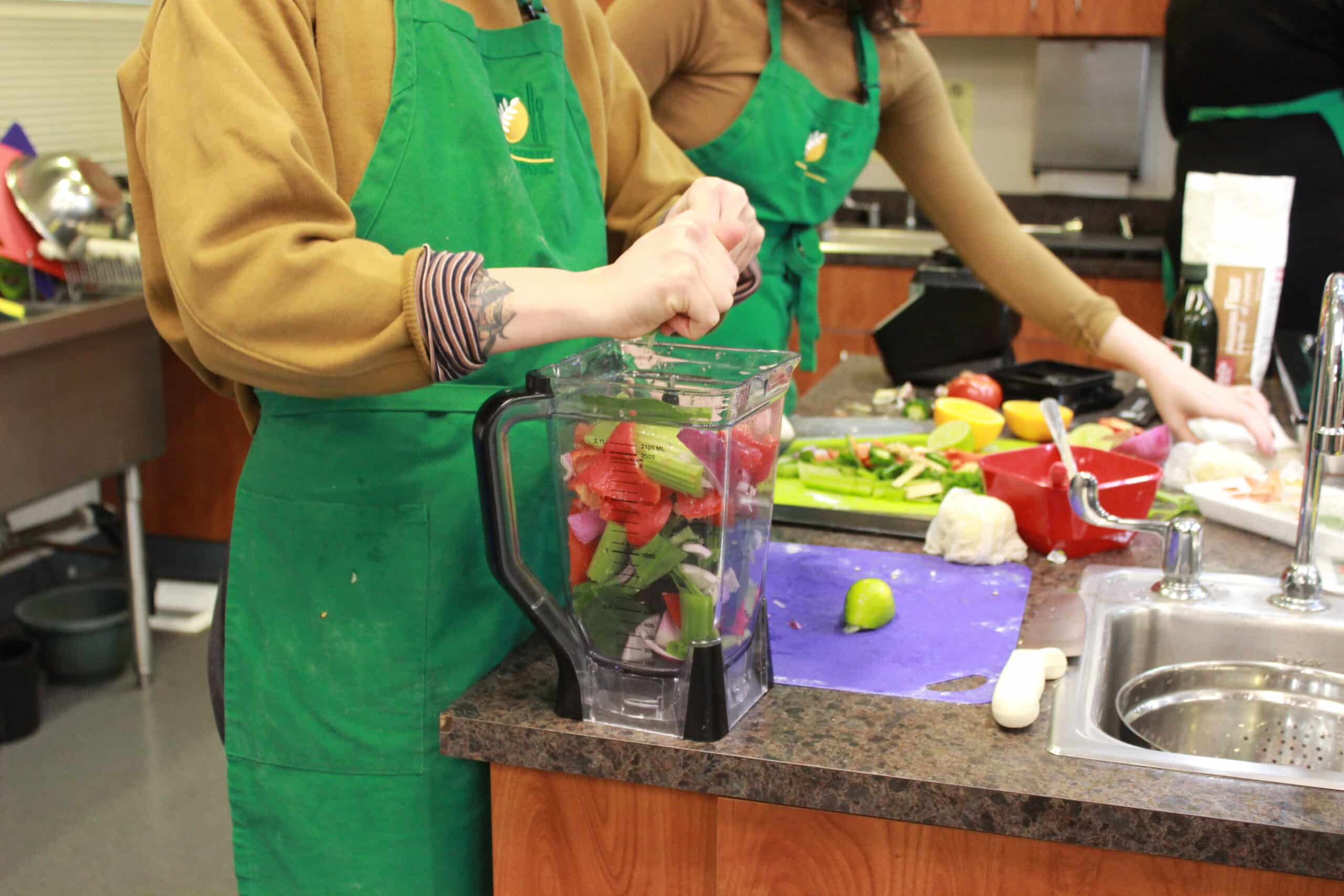
Additionally, classes designed for low-income individuals and families focus on cooking skills, nutrition and even gardening. “The Nutrition Education program is designed to address root causes of hunger by sharing knowledge for healthy living and teaching skills for self-sufficiency,” explains Lauderdale. One class participant said, “My family and I are taking cooking classes. Everyone involved is super friendly and knowledgeable and just learning knife skills has made such a difference! It’s hands-on learning, we get to eat what we make, and are sent home with a bag of groceries, while making new friends, all for free.”
Teaching healthy habits to youth also helps to end cycles of poverty and food insecurity. “I help teach our Seed to Supper gardening class and I also tag along to support my colleagues in the SNAC middle school cooking class,” shares Price. The Student Nutrition and Cooking (SNAC) class aims to increase teens’ confidence in cooking through hands-on experience using healthy, affordable recipes. The course, offered in many local middle schools and teen centers, covers the basics of nutrition and healthy eating to “equip teens with valuable life skills for independence and good health.”
As food prices continue to inflate, CCFB sees individuals from all walks of life needing help, many who are coming to a food bank for the first time. Lauderdale shared with me that though she has worked with the food bank for many years, she still sees people who do not know how to access food. There is no application or verification process and the list of pantries and hot meal sites is easy to find at clarkcountyfoodbank.org/foodfinder.
She says one way you can help is to simply tell others. “If you know someone who could benefit from food assistance, please share the resources available in Clark County.” She adds that some of the partner agencies they work with are also in need of volunteers. “We are all working together to combat food insecurity in our community.”
Price agrees adding, “To anyone considering getting involved at the food bank, I’d say that there is a place for you here. Whether you’ve never stepped foot into a garden bed or you’ve been farming for decades, you’re welcome with us. And if playing in the dirt isn’t your thing, call or email us to find out the many other ways you can get involved. We hope to see you soon.”
Read the full April 2024 issue here:
Go here to read about more local organizations making a difference in Clark County.