

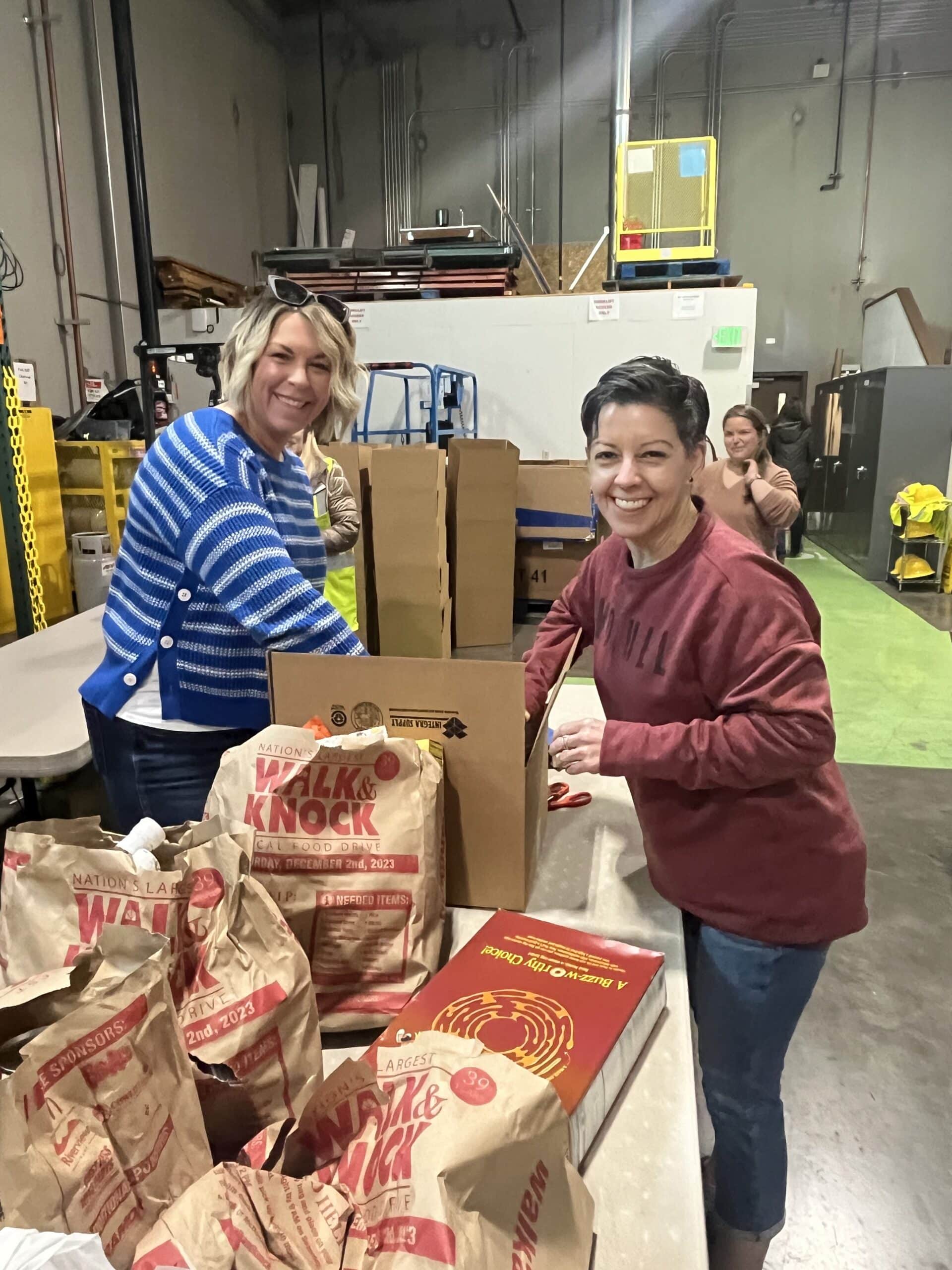
Leadership Clark County: Changing Lives Through Community Engagement
Community engagement benefits everyone. From caring for individuals and families in need, to engaging with political leaders to improve laws, to creating more equitable systems, it takes all the unique skillsets in a village to create a better village.
Leadership Clark County (LCC) is a nonprofit, nonpartisan, civic leadership program founded in 1993 by a group of community leaders who discovered that it was the same people serving on all the nonprofit boards. The organization’s mission is to develop new, compelling leaders to enrich a thriving community. Over the past three decades, LCC has produced over 900 alumni who actively contribute to various sectors, including nonprofit organizations, civic groups, businesses and public offices. LCC continues to value and incorporate its core values of community, leadership, inclusion and service with every class that goes through the training.
Tina Krause, the executive director of Leadership Clark County, describes the program as a community leadership program. “It runs nine months, the same as the school year, so we start in September and end in June. We do one session a month on a different system in Vancouver or the community, and we dive deep into the current issues. Who are the businesses, the key players and the individuals that are doing the work? We hope our participants find something they’re passionate about, get more involved and give back.”
These are not sessions where adult learners sit in a class with a pencil and notebook. Participants engage in monthly full-day sessions incorporating classwork, group discussions, site tours and peer-to-peer learning. These sessions provide practical and experiential learning opportunities, facilitating direct communication and interaction with key decision-makers across the public, private and nonprofit sectors.
Krause completed the program in 2012 and immediately fell in love with its mission. She joined the Curriculum Committee, which helps plan future sessions. She led that committee for 10 years, and then, three years ago, when the position of executive director opened up, she jumped on it and landed the role.
A key component of LCC’s mission is fostering community partner projects. Participants are grouped into project teams and collaborate with specific community partners, ranging from nonprofits to public-sector organizations. These projects have supported significant community initiatives such as “Give More 24!” and the Aviation Technology program at the Cascadia Tech Academy. LCC students have contributed to over 150 community partner projects, positively impacting the communities where they live, work and play.
Diversity, equity and inclusion play a massive part in the LCC organization. LCC developed an equity plan to create a more diverse and inclusive environment by removing systemic and institutional barriers that may hinder equitable access to the LCC program. They do this by including diverse alumni for discussions, creating targeted recruitment plans with inclusive activities, and ensuring all committees incorporate diversity, equity and inclusion improvement opportunities into their work plans.
Krause believes that there is a seat at the table for everyone. “Our participants are very diverse, and we like it that way,” she says. If the participant has not served on a board before, that’s OK because those fresh eyes are needed when looking at a community in need. “Pretty much everybody that goes through is like, ‘Oh, I didn’t realize that that was going on, and that’s something I’m passionate about, and I want to get more involved.’ And so we really give them the tools to get involved as well . . . It has developed a lot of leaders.”
It certainly has. The core value of leadership continues to help guide current LCC classes, especially after seeing the alumni who have gone on to hold elected official positions, and spots on school boards and city council boards. Even the mayor of Vancouver, Anne McEnerny-Ogle, is an alumnus of Leadership Clark County.
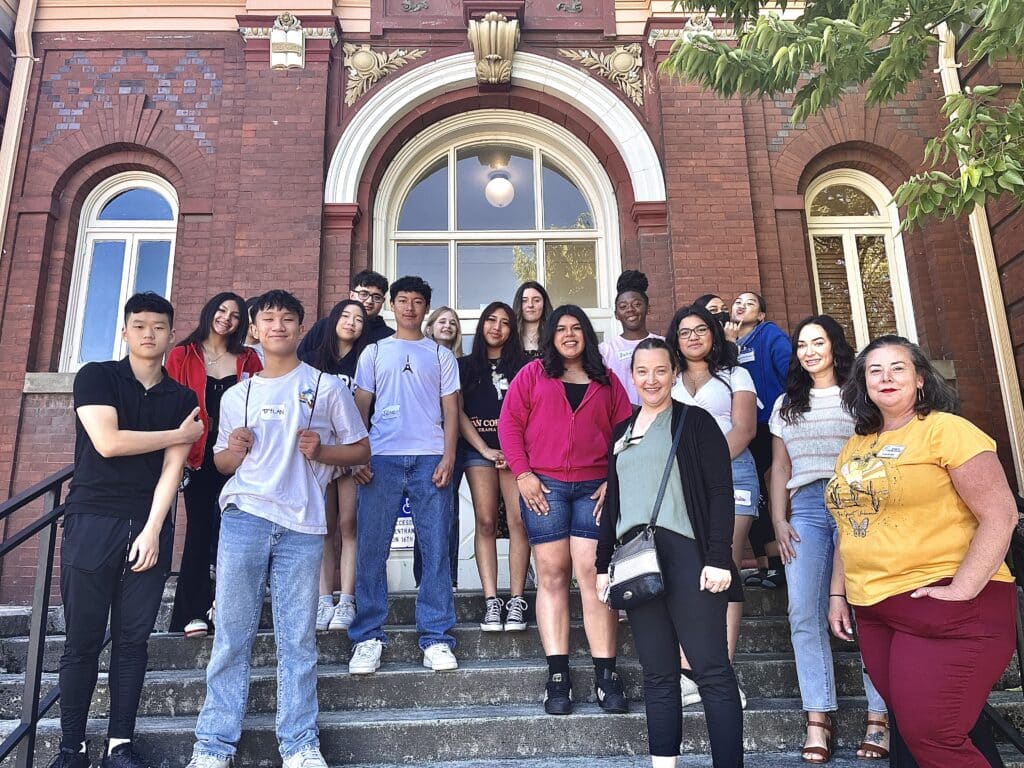
Leadership Clark County is not only for adults. Recognizing the importance of nurturing future leaders, LCC introduced the Youth Leadership Summit, an empowering program tailored for high school students eager to cultivate their leadership potential and positively impact their communities. This initiative aims to foster emerging young leaders’ growth by honing their leadership skills while offering valuable insights into the infrastructure and services that sustain and uplift Clark County.
So, how does it all work? How does this small group of emerging leaders connect with nonprofits that need support?
It’s a process that’s months in the making.
Over the summer, Leadership Clark County begins soliciting nonprofits in the community, who submit a need or a challenge for the group. LCC selects about six projects to take on every year, and then LCC members decide what project they would like to work on and help with. Those class members begin to work with those partners from October to May, and then they present their projects.
An example of this is a current project being worked on for Cascadia Tech Academy’s fashion design program. The idea for a storefront was pitched, and it serves two purposes: to teach kids the business side of fashion, and how to make alterations to the clothes. LCC is working with the students on everything that goes into having a business.
One of the best parts of being part of an LCC class is that no prior experience is necessary. All that is required is passion and a desire to learn.
Krause says that the group only considers three things when selecting applicants for the next LCC class: ” a desire to give back to the community, someone who wants to learn more about their community and someone who wants to make connections.”
LCC accepts applications March-June for its 9-month leadership development program which begins in September each year, and they accept up to 36 participants annually. The program offers tiered tuition, allowing applicants to choose the level that best fits their financial situation without asking questions. Additionally, LCC offers scholarship support contingent on funding availability, ensuring financial constraints do not hinder potential leaders from participating. “We really try to work with our participants to make sure they can afford to go through the program,” says Krause. As a nonprofit organization, LCC also relies on sponsors to sustain its programs and initiatives. Sponsorships are vital in supporting class sessions, activities and events, all of which aim to build strong leaders for the community’s future.
It all comes down to building a better tomorrow, one leader at a time.
If you are interested in applying as a Leadership Clark County participant, or if you are involved with a nonprofit and would like to know more about how your organization could collaborate with Leadership Clark County, go to leadershipclarkcounty.com or contact Tina Krause at director@leadershipclarkcounty.com.
Read more of our recent posts below.
-
Read Now: Vancouver Family Magazine May 2026 Issue

Family Health Issue | A Family Weekend at Great Wolf Lodge – Grand Mound | Clark County Battle of the Bands
-
Stronger Together: How Family Fitness in Clark County Builds Health, Connection and Community

From swim lessons to community courts, get ideas on how to get active together as a family while building confidence, connection and lifelong healthy habits along the way.
-
A Family Weekend at Great Wolf Lodge – Grand Mound: A Guide to Waterpark Fun, Activities & Tips

Discover what a trip to Great Wolf Lodge – Grand Mound really looks like, from waterpark favorites to MagiQuest adventures and all the family-friendly activities in between. Here’s everything we tried and what we recommend for your next getaway.