


Backyard Beekeeping for Beginners
Table of Contents
I began digging up a spot in the backyard for a vegetable garden just one month after we bought our home. Even though my husband wasn’t totally on board to begin with, he loved the fresh produce I pulled up and was soon building a beautiful path and constructing a fence to keep the neighborhood bunnies at bay. A few years later, he removed sod to make room for more rows and even agreed to adding an apple tree.
As my garden has grown, I have thought about ways to increase pollinators to my yard. I started with planting more flowers, but didn’t notice a significant difference in how many bees were visiting. As I looked for answers specific to our area, I was lucky to find a spring Mason Bee Workshop hosted by the Clark County Master Gardeners. One of the first things I learned from presenter, Anne Bulger, is that if my goal is early spring pollination, I should definitely be focusing on attracting mason bees in my backyard.
Beekeeping: Mason Bees
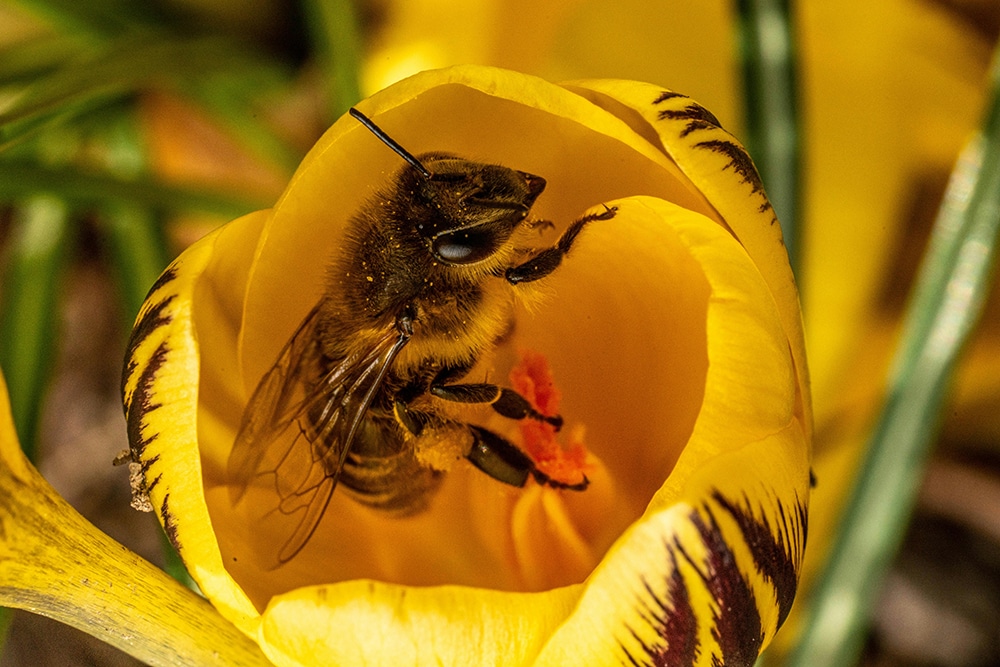
Honeybees have a pollination rate of just 5%, while mason bees boast a 95% pollination rate. Eighty-five percent of plants rely on insect pollination, and mason bees do their part without much recognition. When I heard that they are often mistaken for houseflies, I realized I had made that very mistake, and I likely had more bees in the garden than I originally thought.
After the workshop, Bulger told me she loves teaching others how to care for bees because she finds bees and insects to be “magical.” “They are such powerhouse contributors to our food chain in such a small package.”
Bulger first began housing mason bees in the ‘90s after joining the Clark County Beekeepers Association. Her family lived on five acres in Brush Prairie with a large garden and orchard, so she naturally wanted to bring bees to it. Bulger had inherited some honeybee equipment and was learning about them while getting to know other local beekeepers. “One group member was hosting mason bees. At that time, he was selling a wooden block with the right sized holes, and it was full of cocoons, so I bought some for five dollars each,” she recalled, adding that, “Compared to the honeybees, they were almost effortless to host.”
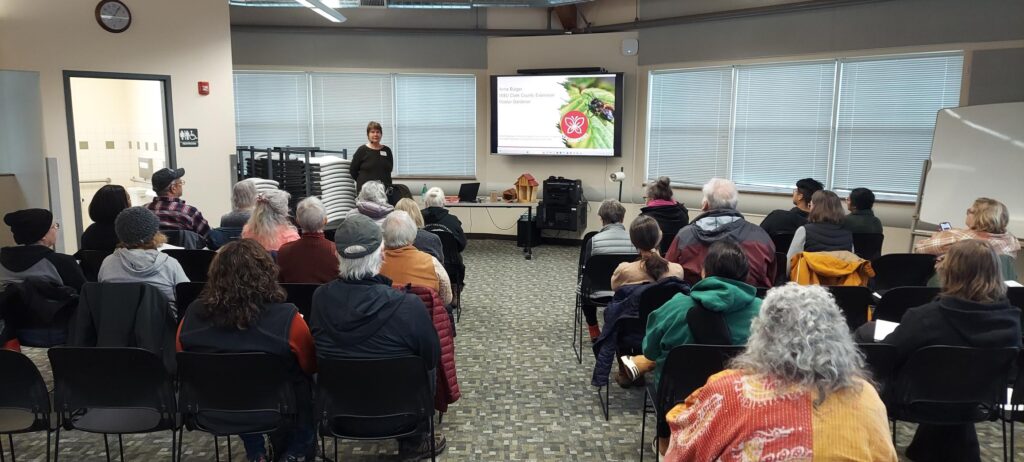
In 2022, Bulger fulfilled her dream of becoming a Master Gardener and was asked to rejuvenate the mason bee project at Heritage Farm. “It had been neglected,” she said. After sprucing up the bee homes that were still salvageable, Bulger added a few more. The farm now has eight houses in the fruit orchard.
“Mason bees are a much more environmentally sound bee as they are native,” Bulger informed me. In Washington, there are over 600 native bee species (honeybees are non-native). They are also solitary bees, which means that all females are queens and take care of their own nest. Each female will only lay 15-20 eggs in a lifetime, but once you get started hosting cocoons, it is extremely easy and inexpensive to increase your number of bees if that is your goal.
The best time to start is in the early spring. Since mason bees are among the first bees to emerge in the spring, they will need early blooming plants with nectar and pollen when they emerge from their cocoons. Bulger says “heavy hitter” trees that provide a great nectar and pollen source include the big-leaf maple, willow, apple and cherry. She also recommends shrubs such as red elderberry and Indian plum, as well as the perennials winter heath and Lenten rose. Edgeworthia, a non-native early bloomer is one of her favorites, as they are highly fragrant. The bees need these blooms within 300 feet of their nests.
The next step is to find a good place for your bee home—ideally facing southeast where the morning sun will shine on it. The bees will also need a mud source within 25 feet of the house because the females use this mud to build chambers around each egg she lays, hence the name mason bees. It’s fairly simple to build a home yourself using PVC piping, which has a 2-3-inch overhang to protect the nesting materials from the rain. Nesting materials should have openings of 8 mm and be 6 inches in length.
While it’s possible to simply put up a home and hope that mason bees will move in, purchasing cocoons is the best route to get started immediately. Local shop Joyful Honey and Beekeeping Supplies in Battle Ground sells supplies, as do many online suppliers who ship cocoons. Cocoons are placed in the tubes in late March or early April, and from there it’s easy. After about five days of 55-degree weather, you should see mason bees coming and going. They will begin to fill the tubes with their eggs, so if you notice the tubes getting full, you may need to add more tubes, or another house!
In early June, place the nesting materials into a mesh bag to protect the cocoons from predators and store them in a protected, shaded and ventilated outdoor area. “Your job is to check these bags every week for any insect activity noted in the bag in case those pesky critters got into the nesting cavities.” explained Bulger. In October, you should harvest the cocoons. Bulger offers a fall presentation that includes a harvesting, cleaning and storage demonstration.
If the removal, storing or cleaning process is intimidating, there is help. Joyful Honey and the Clark County Beekeepers Association both host classes, in addition to Clark County Master Gardeners. Another option is to rent cocoons from Rentmasonbees.com based in Bothell, Washington. They will send you cocoons and you simply ship them back in June. The company handles all the cleaning and storage and makes certain that parasites are not infecting any bees. They also supply leaf-cutting bees which are active in the fall and can use the same home as the mason bee. This is what I plan to do to have more pollinators around when my vegetables are growing.
Bulger wants beginning mason bee hosts to know that “native bees, such as the mason bees, are not interested in hurting you in any way. They have a gentle nature. Your understanding of how our Mother Earth supports us becomes more evident as you work with these generally unknown and often unnoticed native bees.”
Honeybees
After learning all about mason bees, I went to visit a dear friend and fellow gardener, Jenifer Mathews, who four years ago added honeybees to her yard. When I asked why she and her husband, Dean, decided to embark on a beekeeping adventure, Jen told me it was her love of nature and that bees are the key to everything they have on their land. While we spoke, Dean was upgrading their chicken coop and Jen had just finished preparing her garden for spring planting.
Since honeybees are a lot trickier to take care of, the Mathews strongly advise taking a class first. Penn State University offers a highly recommended self-paced course which covers bee behaviors and treatments for common ailments like chalkbrood disease and varroa mites. “It’s harder than it sounds,” shared Dean. “Year one was understanding what to look for.” “You want so badly to do everything right, but it’s really hard to do it right,” Jen added, “You have all these dreams of being like the lady at the farmer’s market and having all this honey, but everything is against the honeybee.”
Year two, they said it was much easier to find the eggs and see if they were healthy or not. They also had a better understanding of what was happening in their hives and what not to stress over.
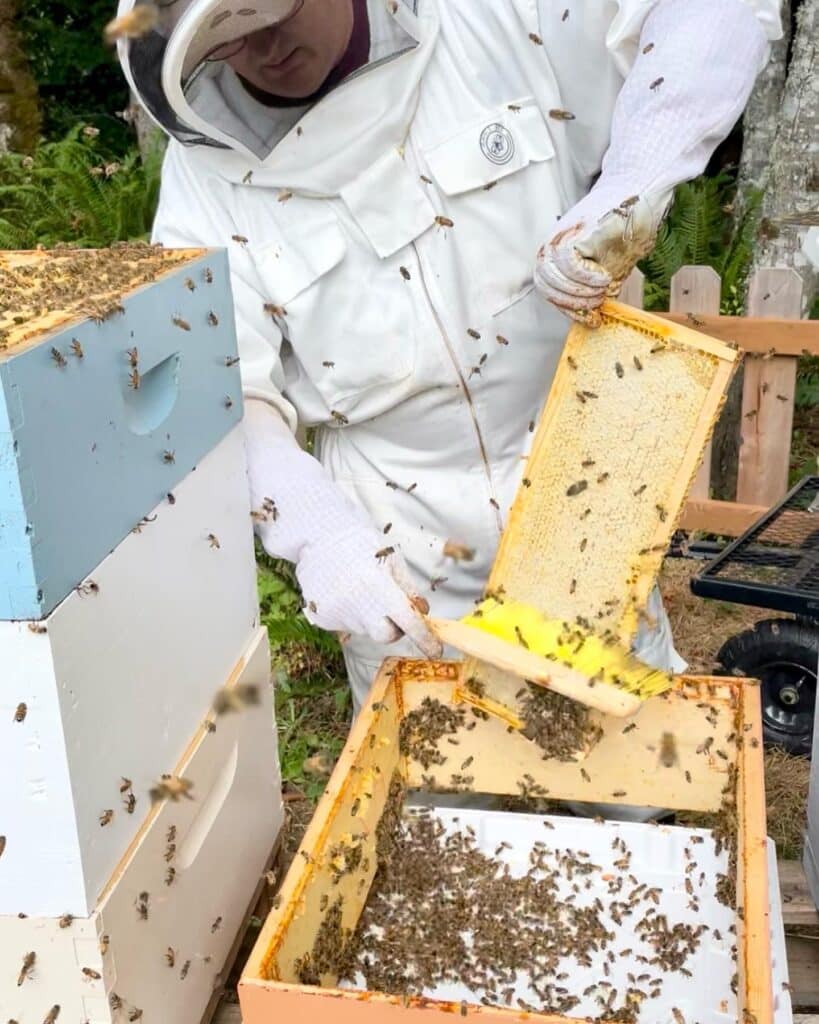
During my visit, Jen and I suited up to take a peek in the hives to determine who had survived the winter. A hive can consist of sixty thousand bees at the peak of summer, but in the winter will drop down to about ten thousand. In late winter, those that are still alive will take a cleansing flight to excrete since they haven’t left the hive in months. Jen had noticed only one of her three boxes looked active on a recently warm day and was worried they had lost their other two hives.
When we opened the first box, it was clear there was no activity. We pulled up a few frames and it was truly amazing to see what the bees had done. The honey cells were the most obvious and some had been capped for long storage. The second box had a little activity, but we quickly realized these were “robber” bees from the only surviving box taking honey from a dead hive. When we opened the last box, Jen added some sugar to feed them. It was like watching children jumping into a pile of snow, the bees immediately began burying themselves and became very active, despite it being a cold evening.
“Everyone has a job,” Dean went on, “You think the queen is in charge, but she’s not, the worker bees are. They know what to do to make sure the hive survives.” He then described how a queen, who lays around two thousand eggs a day, can choose if she will lay male or female eggs. But, if she is not laying enough healthy eggs, the workers will make several queen cups. The queen cup is a larger cell where the larvae are fed extra days of a special “royal jelly” to produce a new queen. The first one to hatch will kill the other queens.
“Here’s where it gets crazy,” continued Dean. “After hatching, the queen will fly five miles away despite never before leaving the hive. The drones from her colony will only go one to two miles away to a drone congregation area and that’s why the queen goes five miles, to [mate with males from other colonies] to ensure genetic diversity . . . No one knows how they find each other.” For comparison, mason bees will only travel 300 feet from their nest.
Marveling about the work bees do, Jen added, “Next time you put a teaspoon of honey in your tea you can appreciate that it was the life’s work of 12 honeybees and their colony. ‘BEE’ grateful and teach your kids not to kill the honeybees!”
The Mathews’ fascination for their bees was contagious. I quickly realized how ungrateful I had been for the work they do—both the bees and their keepers. The boxes were heavy and sealed with bee resin (the stickiest stuff on earth according to Jen), requiring a crowbar to break open. Just putting the suits on correctly and not panicking when bees began swarming were things I had never thought about while enjoying my morning English muffin with honey.
Speaking of the honey, some years the Mathews have not had a great harvest, but they soldier on just like their bees.
Supporting Bees
Like my garden, which has grown slowly overtime, I’ve learned that beekeeping is very much a learn-as-you-go endeavor. Some years are better than others, but each obstacle is a lesson that increases your expertise and your deference for nature. And while not everyone would like to take care of their own bees, anyone can help to make Clark County more bee friendly. “Pesticides are a real problem for bees, so using less in our yards is important,” reminds Bulger.
Simply planting a flower garden can make a difference, too. Clark College, a certified bee campus, is a great place to get inspiration for what types of flowers to plant. Being educated about bees is also important, which is why classes from multiple disciplines there at Clark study bees. “Our native bees need our support in promoting their population by protecting their habitat,” reiterates Bulger. “The food we eat depends on these tiny creatures as well as the beauty we enjoy that contributes to our good health.”
Read the full May 2025 issue here:
Pollinator Festival
The Vancouver Bee Project will present a day dedicated to celebrating pollinators and their essential role in our ecosystems. Enjoy a Bee Walk at Clark College Meadows, VITA Elementary School Walk & Talk, featured speakers and more on Saturday, June 21, 2025, 9 am-3 pm. Learn more at pollinatorfestival.org.
Go here to read more posts about the environment.
Read more of our recent posts below.
-
Summer Fun is Still Here! Nike Kids Camps Still Have Openings Throughout the Summer

Learn more about Nike Kids Camp sessions, with additional camps opening throughout the summer.
-
Read Now: Vancouver Family Magazine June 2026 Issue

Swim Schools in Southwest Washington | Enchanted Forest Turns 55 | NW Getaway: Family Road Trip through the Redwoods and Crater Lake
-
Making Waves: A Guide to Southwest Washington Swim Schools

Local swim schools across Southwest Washington help kids build confidence, skills and a lifelong respect for the water. Read our guide to programs designed for every age and stage.



Andrea
Thank you for this! How great!