
Like Child, Like Parent: When a Neurodivergence Diagnosis Comes Late in Life
In 2022, Vancouver mom Amanda Dillinger left a potential therapist’s office very confused after the therapist had referred to her 14-year-old twins as autistic. It was something Dillinger had long suspected, but with no official diagnosis, she did not have much information. That’s when she turned to the internet and threw herself into research. As she began to explore the signs and symptoms, she found that not only did her children show traits of autism, but also of ADHD.
This is a situation many parents find themselves in. According to a paper published by Front Psychiatry in the National Library of Medicine, 50%-70% of individuals with autism spectrum disorder (ASD) also present with comorbid attention deficit hyperactivity disorder (ADHD).
Armed with more answers for her children, Dillinger soon made another shocking discovery. She, too, experienced traits of both conditions. “I started a long list of traits that I identified with. While my kids were getting evaluated, I asked the psychologist if I should get evaluated, too. He said yes, so I was diagnosed autistic and ADHD, commonly referred to as AuDHD, a month after my twins.”
The Process of Neurodivergence Diagnosis
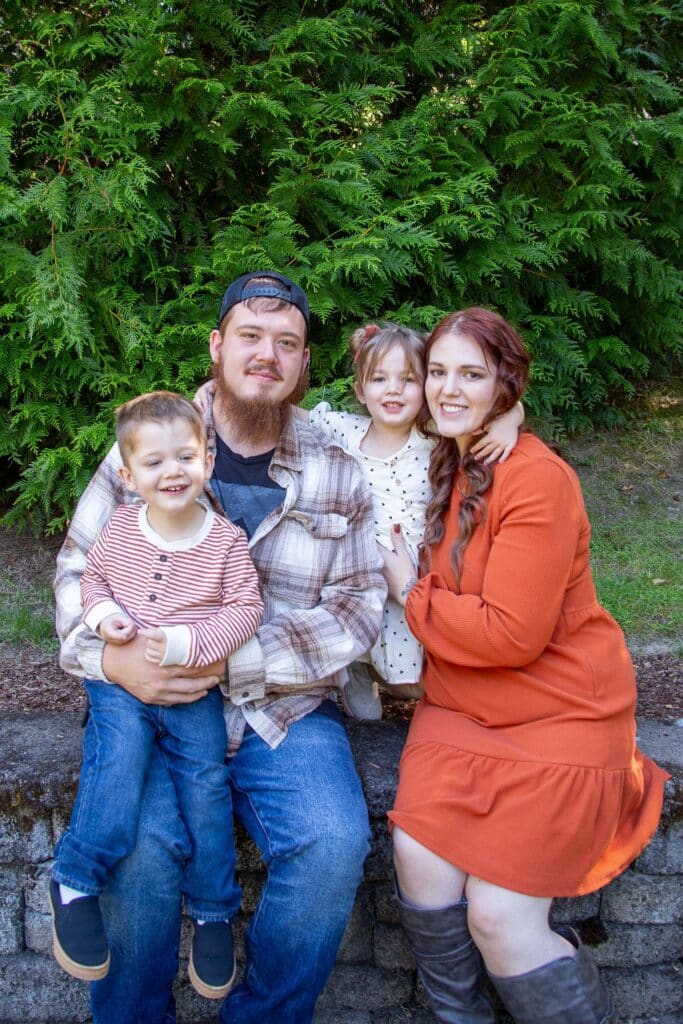
Photo by Randlee Studio.
When a child begins to exhibit traits of ADHD or autism, many parents embark on a long process of observation, testing and eventually diagnosis. This process often involves consultations with pediatricians, psychologists and specialists who assess the child’s behavior, communication patterns and cognitive functioning. For parents who are themselves neurodivergent but unaware, certain aspects of their child’s symptoms may seem surprisingly familiar.
Parents may notice the parallels with their children in areas such as difficulty focusing, challenges with time management, sensory sensitivities or social struggles. In the process of supporting their child through diagnosis and treatment, some parents experience a revelation: they, too, might have the same condition.
“Parents will go home from the intake and do a lot of research,” says Dr. Donna Johns, a clinical psychologist at KIDO Psychological Services in Vancouver. “And when they come back, they’re like, ‘I want to be tested also.’ And it does run in families. In other words, if somebody has ADHD in your family, there’s a higher propensity for somebody else in the family to have it.”
Another local mom, Katelynn Brumley, started noticing the same patterns in her emotional and regulation patterns as her children. That’s what led her to seek testing and get a diagnosis for herself.
A Complex Emotional Journey
The realization that one might have ADHD or autism as an adult can trigger a complex emotional journey. On the one hand, it can be liberating to have an explanation for past struggles. For parents who have long felt “different” or struggled with self-criticism, a diagnosis offers clarity and a path forward. Knowing the reason behind some of their difficulties can reduce feelings of shame or inadequacy.
However, the discovery can also bring about feelings of grief or guilt. Parents may feel sadness for the years they spent undiagnosed and unsupported. “Many people come in here going, ‘I thought I was lazy. I thought I wasn’t able to do things. I thought there must be something wrong with me. I’m scatterbrained,’” says Karey Amies, a psychometrist, also with KIDO Psychological Services. “For them to come in and get a diagnosis and realize that it’s not that they’re lazy or scatterbrained, it’s just that their brain is wired differently, can give them a sense of relief. A lot of times, the world wants us to change. The world wants us to conform to neurotypical behaviors, and it’s not that easy for us. It would be much simpler if the world could learn to adapt and we could meet in the middle. Yes, you may have ADHD, but there are ways that you can try to overcome some of the challenges, but also realize that some of them you can’t help. It’s in your brain. That’s what Dr. Johns has taught me.”
For Dillinger, the whole process was not only eye-opening but also improved her entire life. “Getting diagnosed was incredibly validating. It’s allowed me to start unmasking and be my authentic self.”
This experience changed Dillinger so much that she wanted to educate other parents going through the same thing. She started a YouTube channel that documents her diagnostic experience and connects people to a neurodivergent community.
“My diagnoses were literally life-changing,” explains Dillinger. “I was hitting a major mental health crisis and having serious burnout. The diagnoses let me realize there was nothing wrong with me; I’m just autistic and ADHD.”
Brumley experienced the same life-altering experience after receiving her diagnosis. “The way I do routines and everyday things are much more accommodating to me. I can be a better version of myself and learn how to help myself, my kids and others needing more help and support.”
Amies says clients who come in wonder how much their diagnosis can change their lives. “Many adults are like, ‘Well, I’ve lived my life this far. What does it matter?’ And, well, it just depends. If you want to see what it would be like to alleviate these symptoms, you could always talk to your doctor about medication. If you would like to have your life function on a higher level, you could talk about therapy. For some people, a diagnosis gives them confirmation, validation and sometimes even the grace to accept the way they are and not be so hard on themselves.”
Walking the Path Together
There are also benefits to getting tested for families of neurodivergent adults. For parents and children navigating a diagnosis simultaneously, the experience can foster mutual understanding and support. It allows for a unique opportunity to learn about neurodivergence together, with parents modeling how to advocate for accommodations, manage symptoms and embrace their identities. Parents can show their children that having ADHD or autism doesn’t define them but can be a source of strength and creativity when well managed. Sometimes, shared experiences between parents and children can improve communication and deepen the relationship.
For parents, seeking a diagnosis for themselves is not selfish; it can benefit their entire family by helping them develop better coping mechanisms, reduce stress and improve overall well-being. These are experiences Brumley has seen in her own life. “I feel much more confident and able to help myself in ways I have always needed but didn’t realize until now, at 30 years old.”
For adults who suspect they might have ADHD or autism, seeking a professional evaluation is an essential step. Adult ADHD and autism diagnoses come from psychiatrists or clinical psychologists, who can assess symptoms, conduct interviews and rule out other conditions. Taking that first step of consulting with a qualified professional could open up a whole new world of possibilities.
Read the full November 2024 issue here:
Watch one of Amanda Dillinger’s videos from her YouTube channel, @i.am.mindblind below.