
Reduce, Reuse, Repair
When our barely 4-year-old dishwasher started leaking, the repair man first asked what we had originally paid for it before giving us his quote. Turned out, the cost of the part and repair was more than the cost of a brand-new model, which would also include free installation and disposal of the old one. Back when we had shopped for this very dishwasher, we had been careful to read a lot of reviews in order to avoid getting one prone to problems. And though we didn’t choose the best dishwasher, we certainly hadn’t picked the worst one either.
Frustrated at the thought of buying another dishwasher likely to only last a few years, my husband and I looked it over ourselves. Fortunately, after I carefully cleaned and adjusted the door seal, the leak stopped and we are still using it now—and hoping to get a lot more use out of it.
We learned that with just a little love or elbow grease, lots of older objects can be kept out of a landfill, their life extended. Still, realizing that repairs cost more than replacements left my husband and me a little angry and wondering why there isn’t an easier way to fix things.
Thankfully, there are two Vancouver operations on the front lines of reducing needless waste in Clark County. Both have found that building a community and sharing knowledge is key to making a green lifestyle easy and affordable.
Repair
John Niemeyer and Joyce Evanyo have enjoyed volunteering in their retirement years. They’ve loved reading with children in schools and helping in dementia facilities, and “anywhere we get a chance to meet and visit with people,” they say. While handing out fishing poles to children at Columbia Springs’ annual fishing event, they heard about another program in need of volunteers. Repair (formerly known as Repair Clark County), a quarterly event also hosted by Columbia Springs, needed “fixers” to help repair bicycles, vacuums, lamps and other household items. “I wanted to help out and I thought it would be fun,” says Niemeyer. “Since I had always done all of my own maintenance and repairs around the house, I figured I had some skills.” For the past few years, he’s been working the knife sharpening station, while Evanyo keeps the refreshment table tidy and helps direct people where to go. Both say they come back year after year because, “It gives us an opportunity to meet and visit with people. It’s a combination because it’s a social event, [but] it’s more the satisfaction of helping people out.”
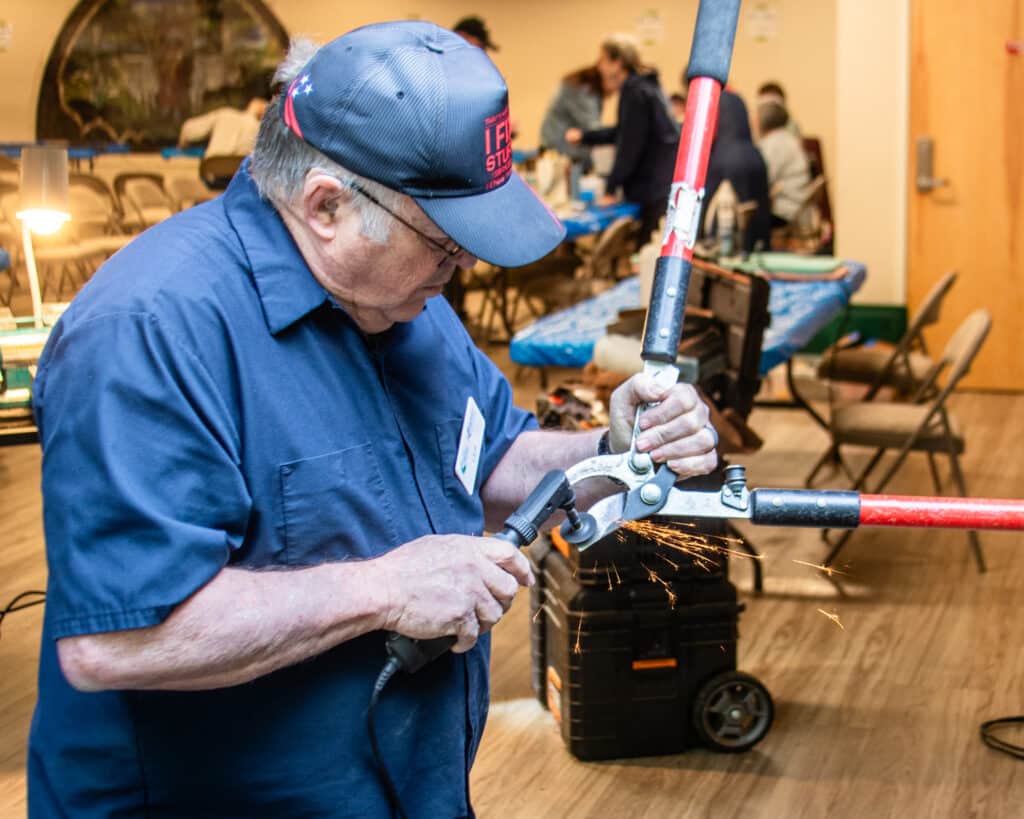
“Repair is more than just a place to fix broken items,” says Columbia Springs’ executive director, Katherine Cory. “It’s a community-driven educational experience that brings Columbia Springs’ mission to life by fostering a greater awareness of the natural world and inspiring stewardship.” Originally named Repair Café, and later Repair Clark County, Repair was adopted by Columbia Springs in 2016. For a time, events were hosted at FVRLibraries locations, but when a grant funding the program was not renewed, it looked like this popular and much needed service would end. “We had to cut staffing for the program and paused every activity,” shares Cory. “In January of 2024, volunteers breathed life into it again.”
At Repair events, Cory says she is always impressed by how the volunteers creatively work through problems, but she’s even more amazed at “seeing participants learn alongside them, gaining confidence and skills they never knew they had.” She says, “It’s not just about fixing what’s broken; it’s about empowering people with knowledge and fostering a sense of resourcefulness and independence,” adding, “They leave with a renewed sense of value and appreciation for what they already own.”
Choosing to repair instead of replace, says Cory, helps to reduce waste and conserve expensive resources. “It’s a small act that makes a big difference. And along the way, they’re connecting with neighbors, swapping stories and building a stronger, more resilient community.” Often, the items being repaired hold special, sentimental value to the owners. Longtime Repair volunteer Mike Farabee remembers, “I fixed a lamp for a lady, and she broke down in tears because it was the only lamp she had in her apartment. I had another gentleman that was so overjoyed I fixed a statue for him. It was something his late wife had given him.”
Every volunteer I spoke with shared similar stories, including Cory: “It’s moments like that that show what we do is about so much more than fixing broken things . . . It’s a reminder that our possessions are more than just objects—they’re memories, connections to loved ones and symbols of experiences. It’s heartwarming to see people light up as they share why their item matters to them and to watch the volunteers listen with care and curiosity. These conversations build community and remind us of our shared experiences and values.”
Currently there are close to 60 volunteers who help at Repair events. In 2024, they were able to fix 82 small appliances, three bicycles, four vintage radios, eight electronics, sharpened over 350 knives/gardening tools and fixed close to 200 other miscellaneous items such as pieces of jewelry and zippers on clothing. They have a fix rate of over 80%, and most items can be completed in about 15 minutes.
“We just feel good about giving back to the community and taking advantage of the skills we have,” says Farabee. “When I train new fixers, I tell them you just want to use all your senses. Nine times out of ten, when you can touch and see something that looks odd, that’s where the problem is.” Farabee also encourages folks who may not have fix-it skills to get involved in Repair, as the organization is always in need of help running the event and other operational duties.
Bringing broken items to a Repair event to be fixed is completely free, and just requires pre-registration. It’s not a drop-off event—you’ll stay with your item the whole time, which allows for community connection and learning. Upcoming 2025 Repair events will take place on June 21, August 2, September 20 and December 6. Visit columbiasprings.org/repair-clark-county to learn more, and to register your item for fixing.
Kindred Vancouver
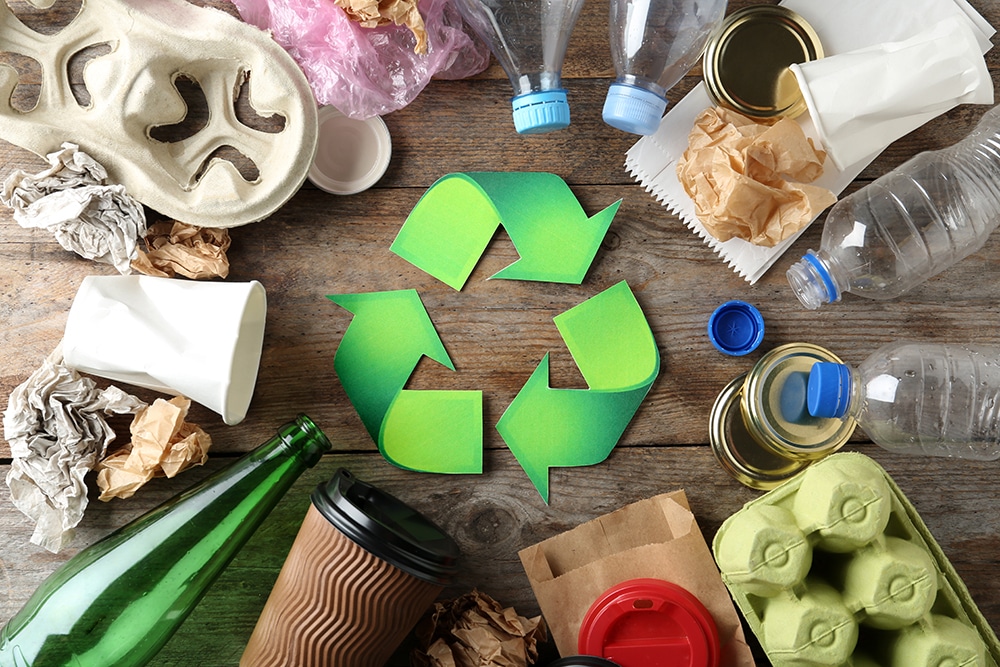
Here in the evergreen state, it’s not unusual to hear people talking about their composting or recycling habits. The three Rs of reduce, reuse and recycle are second nature to many of us. But, if truth be told, it’s not always practical to reuse a soap bottle when a new one only costs $1. This becomes a real predicament for the environmentally conscious consumer.
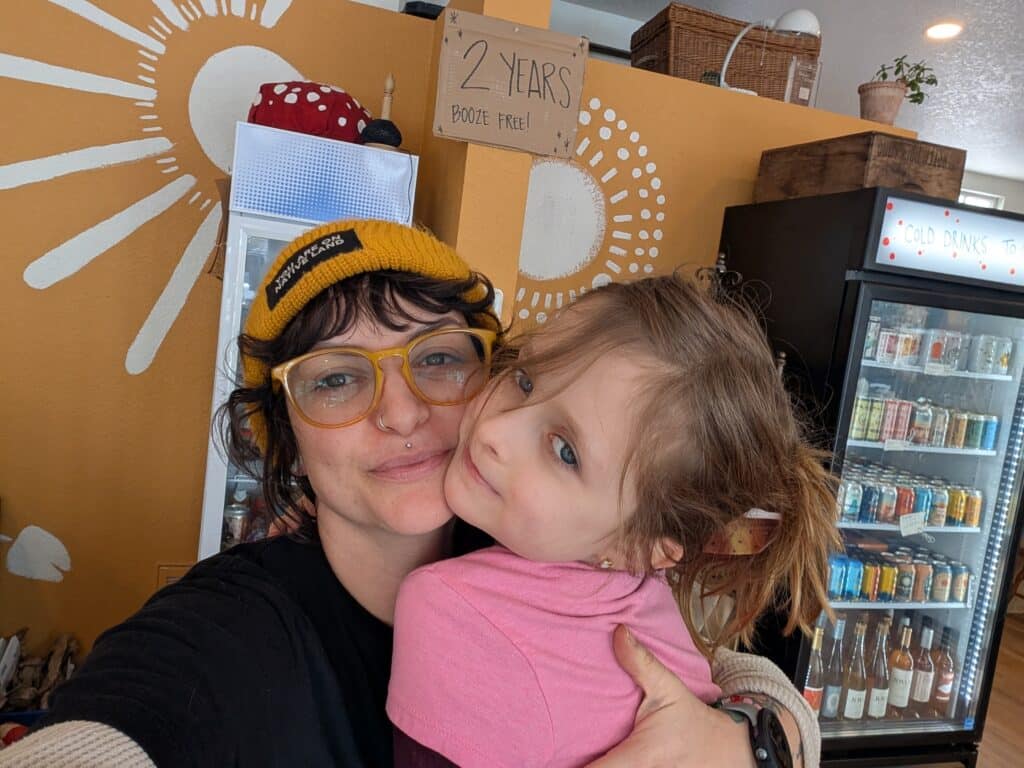
Kindred Vancouver (formerly called Kindred Homestead Supply) on Main Street solves this problem by offering bulk sale and refills that use far less plastic and packaging, or none at all! Patrons are encouraged to bring their own containers and pay by the weight. If you don’t have a durable container, there are glass options for purchase in store as well as tops and pumps for standard mason jars. A large variety of soaps, herbs, oils and vinegars and other staples can be placed in any jar you have on hand and then refilled as often as needed. Additionally, Kindred stocks long lasting brushes and other housewares made from natural materials. About 80% of the products are locally sourced, with owner Alex Luna going to great lengths to make sure everything offered is from reputable and certified organic sources.
“I’ve dreamt of having my own store since I was about 12. Back then it was a coffee shop,” Luna shares. “In 2020, I felt there was a real need to provide folks with a place to shop and live in to their low-waste values, but also a place to gather and share stories and skills with one another. A place where we could recognize our kinship, not just with other humans, but with the more-than-human world.”
To build that kinship, Kindred hosts workshops on everything from how to make your own candles to upcycling old clothing and even plastic-free gardening techniques. In May, Luna plans to bring back a popular flea market and start community clean-up events. Puzzle and board game swap days have also been a big hit. “It’s about the reinforcement of community action,” she says. “Sometimes it can feel like you’re screaming into the void or like you’re the family nag getting after everyone to recycle that or compost this. Being in community with folks we can share that, laugh about [it] and then continue on, knowing that we are champions of a cause greater than ourselves.”
Her first advice for anyone trying to reduce their plastic consumption is to start small, but to know that small changes add up and get easier with time. “I often equate this to reusable bags. There was a time when we all had to get used to this and it was clunky and uncomfortable. . . and now it’s hard to remember a time when we didn’t do this. Start with one small thing you’re committed to changing. Once you’ve got that down, move on to another and so on.”
Luna wants folks to know that Kindred is a resource for helping you live slow and intentionally while keeping a harm-free home. “There are so many ways to do this, and I love conversations with our community on what that can look like for them.”
Read the full April issue here:
Columbia Springs is located at 12208 SE Evergreen Hwy, Vancouver. Go here to learn about their upcoming events, workshops and programs, including Repair.
Kindred Vancouver is open Tuesday-Saturday, 11 am-5:30 pm, and located at 2213 Main St., Vancouver, and online at kindredvancouver.com.